In This Guide
Imagine stepping out for an evening stroll. Maybe it's the routine post-dinner dog walk, a crisp winter trek down a quiet country road, or just the final leg of your commute home from the train station after dark.
As you peer down a dimly lit park path, your natural instinct is to want light. And lots of it.
When shopping for night walking lights, the default assumption is almost always to search for the highest lumen count available. We picture ourselves carrying a portable searchlight that can slice through the darkness like a laser beam. But true night walking safety is a nuanced equation. Unlike extreme trail running, walking in your local neighborhood or down a rural road requires a completely different approach to illumination.
Brute brightness is often a liability on a casual walk. The best light for walking at night isn't the one that temporarily blinds oncoming traffic or washes out your surroundings in a harsh, bluish glare. It is the one that helps you navigate safely, keeps you visible to others, and fits so comfortably that you actually remember to bring it every time you head out at night. The same idea applies whether you are taking a late dog walk, jogging through your neighbourhood, or heading home after work on foot.
What Most People Get Wrong About Night Walking Lights
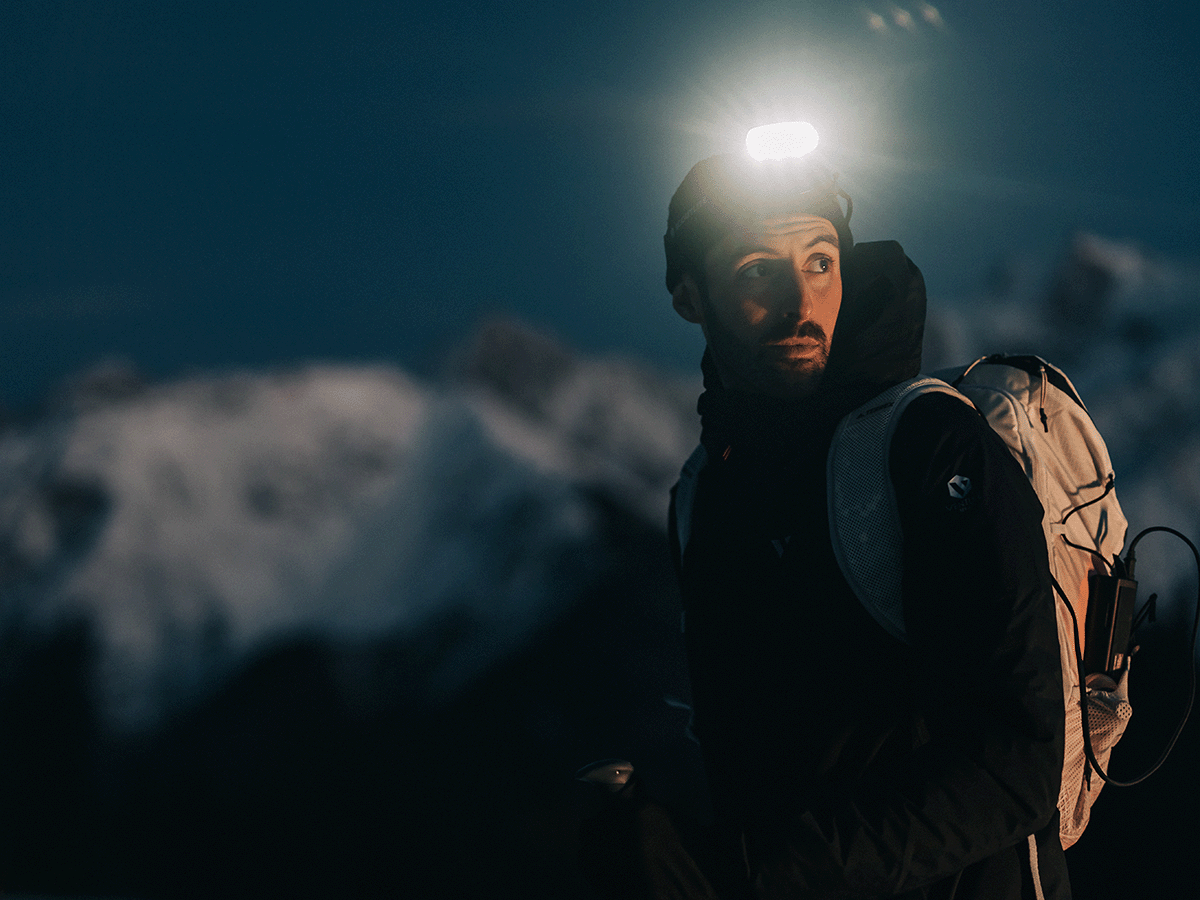
The biggest pitfall in portable lighting design is treating all nighttime outdoor activities as the same use case. Running-light roundups and technical hiking guides often recommend high-powered, heavy headlamps built to throw a beam 200 meters down a mountain trail.
When you apply that same logic to a standard evening walk, you quickly run into the "Overkill Paradox."
- The Glare Trap: Massive lumen counts reflecting off wet pavement, light-colored clothing, or even your dog's white fur can cause immediate eye strain and destroy your natural night vision.
- The Ergonomic Friction: A heavy, bounce-happy headlamp might be tolerable on a trail run, but it feels like an intrusive chore on a relaxing evening stroll. If a light is awkward or uncomfortable, it ends up sitting in a drawer.
- The Single-Task Illusion: Most buyers assume a single flashlight is supposed to handle every task. They think that if a light is bright enough to show them a pothole, it automatically makes them safe from oncoming traffic. In reality, seeing your path and being noticed by a distracted driver are two entirely different technical challenges.
The Two Jobs of a Night Walking Light: Seeing vs. Being Seen
To find your ideal setup, you have to split the concept of "safety" into two distinct categories: Seeing (your ability to see the ground) and Being Seen (the ability of others to see you).
Many traditional lights try to compromise on both, resulting in a beam that is either too harsh for close-up tasks or too directional to keep you safe from a cyclist approaching from the side. A smarter approach treats these as separate roles.
The Mental Model: Two Lights, Two Jobs
- To see: a soft, wide, downward wash of light for the ground in front of your feet.
- To be seen: a low-bulk signal that broadcasts your presence to drivers from more than one angle.
1. Seeing the Path
When you are navigating cracked pavements, avoiding deep puddles, or picking up after a pet, you need a localized, high-quality wash of light. This is where a hands-free light for walking at night becomes invaluable.
Instead of a tight, piercing spotlight, you want a wide, soft flood beam that gently illuminates the space directly in front of your feet.
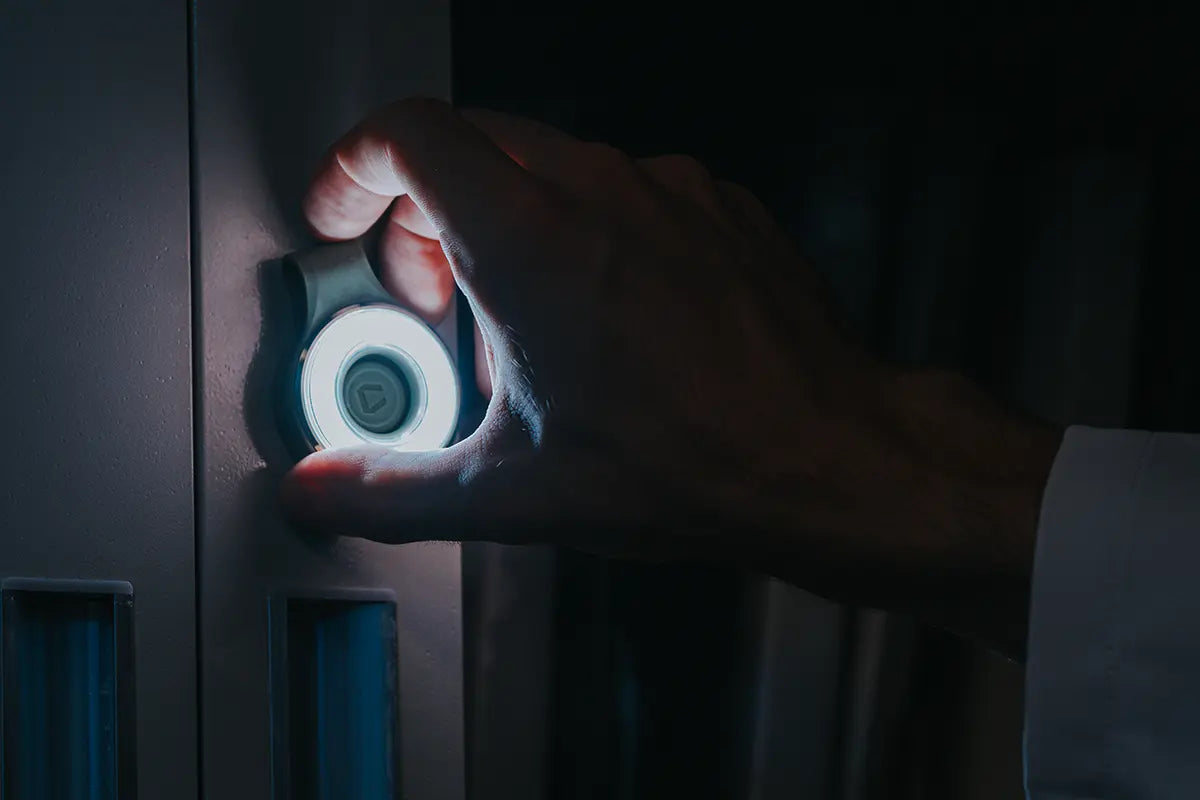
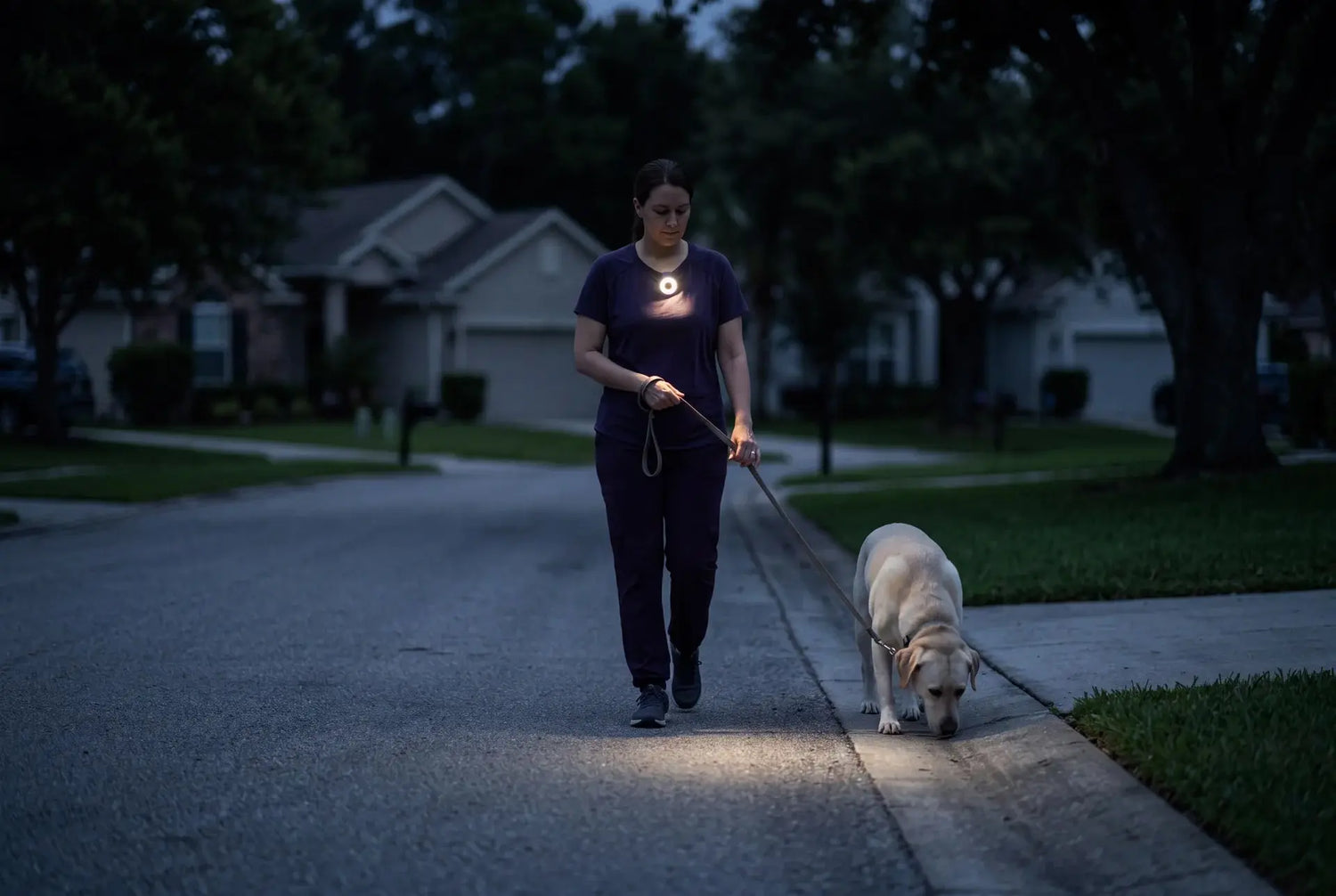
The precision tool: This is exactly where a lightweight wearable light like the Scoutlite SparkO comes into play. Because it clips effortlessly to a jacket lapel or a pocket, it casts a smooth, downward-facing beam right where you need to step, keeping your hands completely free to manage a leash or quickly check your phone.
Color temperature matters here too. A harsh cool-white beam can feel bright at first, but it can also be tiring on dark-adapted eyes when you are walking or jogging at night. SparkO gives you more control over that, with four color temperatures ranging from a crisp 6500K down to a warm 2700K, plus a dedicated red mode. For night walks, a warmer setting feels gentler at close range, while red mode is especially useful when you want light without blasting away your natural night vision.

2. Being Noticed by Traffic
Drivers and cyclists don't need to see the texture of the asphalt around you; they just need to know an active human being is occupying the space. For urban and suburban environments, walking at night visibility is your shield against distracted drivers.
For this job, a forward-facing flashlight isn't enough because it offers zero side-profile protection. You need wider awareness.
The safety signal: A dedicated visibility light, like the Scoutlite BlinkO, is engineered specifically for this purpose. It isn't designed to light up a dark alleyway; it is designed to broadcast your presence using low-bulk, high-frequency signaling that catches a driver's eye long before their headlights catch your clothing.
Being noticeable from more angles, with 270 degrees of visibility, red and yellow light options, plus steady and flashing modes, are the attributes that set BlinkO apart. You can use a softer, more scattered glow rather than a harsh focused beam, so drivers and cyclists can spot you from a distance without being dazzled. With up to 24 hours of runtime and two units that auto-sync, it is designed for exactly the kind of low-bulk, high-visibility safety most walking lights ignore. If you are cross-shopping a professional-grade beacon, our Guardian Angel alternative comparison lines up BlinkO and SparkO against it on weight, runtime, and price.

Why More Brightness Is Not Always Better
It sounds counterintuitive, but lower-lumen practicality is often much safer and more comfortable for night walking than massive output. Leading lighting manufacturers and outdoor guides agree that for familiar urban routes or semi-lit streets, a range of 20 to 100 lumens is often plenty.
When you blast an environment with 1,000 lumens, your pupils constrict tightly to protect your eyes from the intense reflection. The moment you turn that light off, or point it away, you are left completely blind in the shadows.
The Biology of Dark Adaptation
Your eyes need time to adjust to the dark, and a single burst of bright white light resets that adaptation in an instant, leaving you briefly blind in the shadows just outside the beam. A moderate, well-regulated light lets your eyes hold their dark adaptation, so you can still see detail beyond the immediate pool of light. This is also why a warm or red setting is easier on your eyes on a long walk.
What Actually Makes a Good Night Walking Light
Once you move beyond raw brightness, a good walking light is defined by how easily it fits into your routine. The best light is one you don't have to fight with while you're trying to enjoy your evening.
Beam Shape Over Brute Brightness
For close-range navigation, the shape of the light matters far more than its intensity. Many standard torches project a tight, focused hotspot designed to reach far down a path. While great for spotting a landmark in the distance, a tight beam creates harsh shadows and forces you to constantly wave your wrist around to see where you are stepping. For walking, a wide, uniform flood beam is vastly superior. It feels closer to ambient light, which makes it easier to track your immediate surroundings without harsh glare or hard shadows.
True Wearability
If a light requires a complicated harness or feels heavy enough to drag down your jacket pocket, it will eventually be left behind in the garage. A great night walking light should feel entirely unobtrusive.
The 40-gram reality: This is why the SparkO feels genuinely different from bulkier walking lights. At just 40g, it clips to a collar, a pocket, or a backpack strap without sagging the fabric or bouncing as you stride. Its sandwich-style grip holds the material from both sides, which helps it stay steady instead of slipping if you pick up the pace.

270-Degree Spatial Awareness
Most people focus on what is directly in front of them, but the greatest risk during a nighttime stroll often comes from the sides or behind, especially at junctions, crosswalks, or when walking along a road without pavements. A proper safety light needs to provide lateral visibility. A compact visibility light like BlinkO, with 270 degrees of visibility, makes it easier for drivers and cyclists to notice you from more than one direction.
Walking and Running at Night Need Different Kinds of Light
A major gap in most buying guides is that they lump all after-dark outdoor activities into a single bucket. They assume that if a light works for an ultramarathoner or a weekend backpacker, it's perfect for someone walking the dog down a suburban street. But walking creates a completely different set of needs:
- Speed of movement: Runners move quickly and need to see obstacles 20 to 30 meters ahead to avoid tripping, so they need stronger, longer-reaching beams. Walkers move at a deliberate pace; your primary concern is the next three to five steps in front of you.
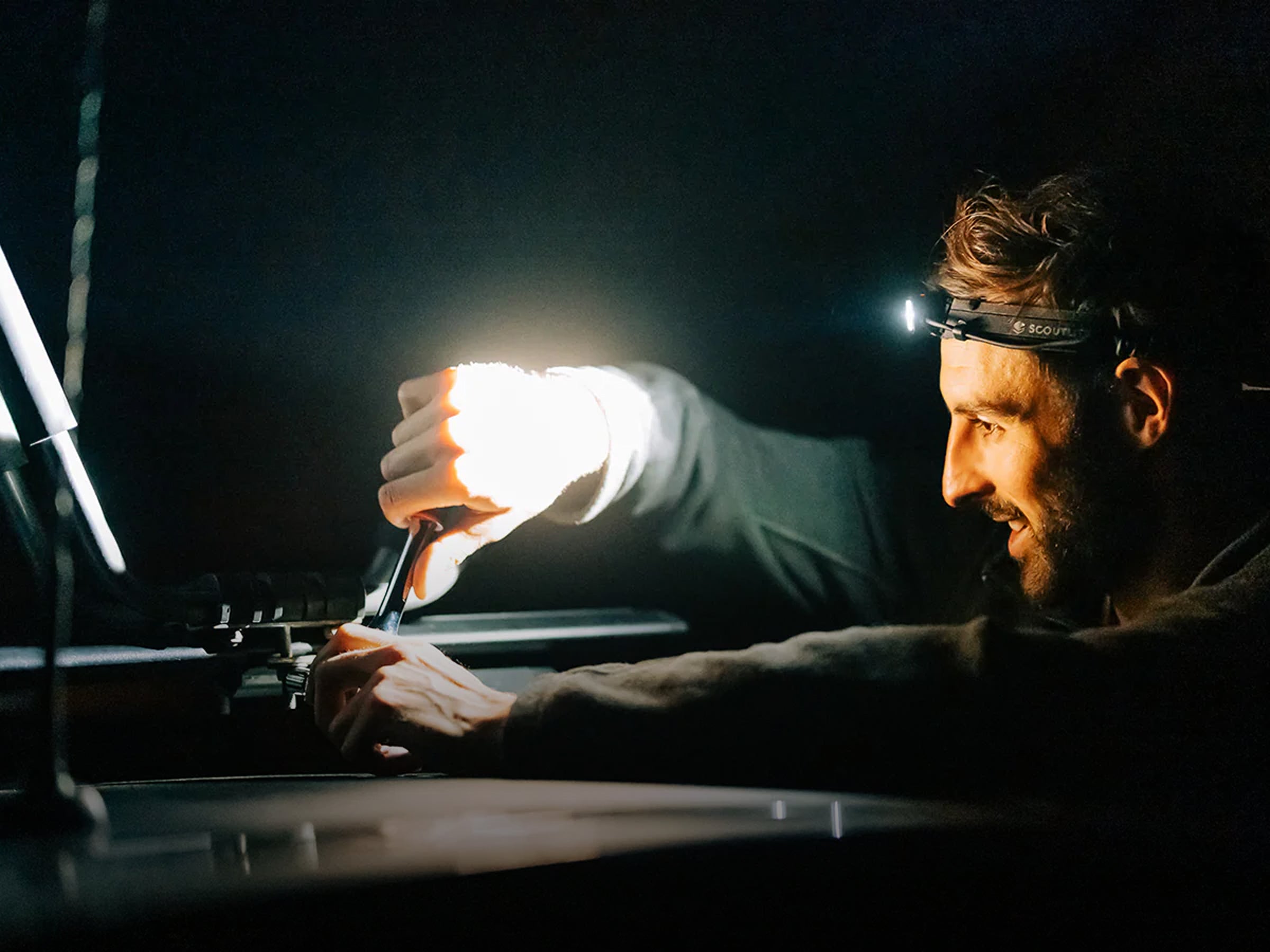
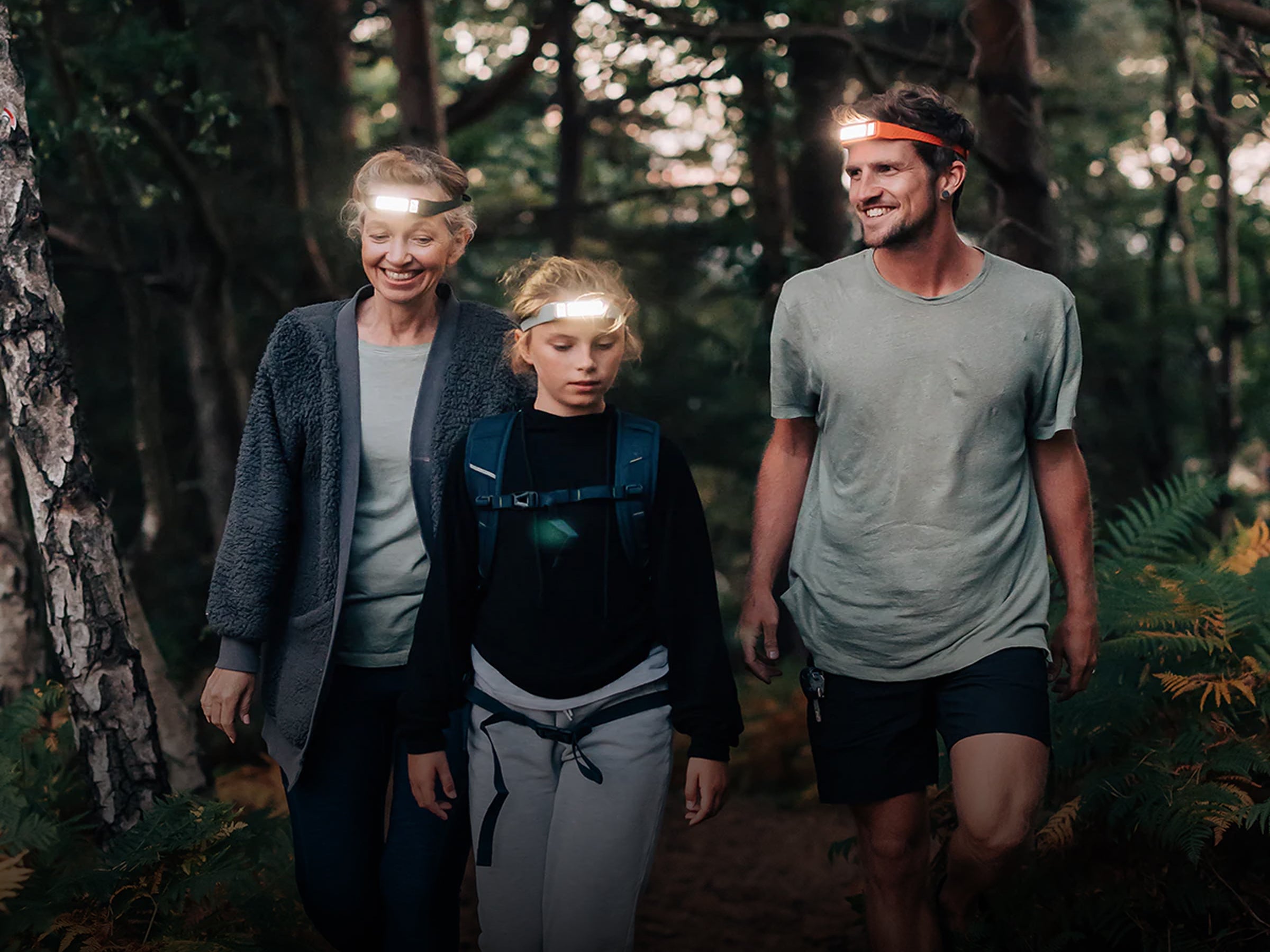
- The interactivity factor: Walkers stop. We pause to let a car pass, chat with a neighbor, untangle a leash, or cross a busy street. A high-powered headlamp means that every time you turn your head to speak to someone, you accidentally blind them. A chest- or pocket-clipped light stays fixed at waist height, keeping the light focused strictly on the ground.
- The environment: Trail runners are usually isolated in nature. Night walkers are frequently moving through mixed environments, shifting from well-lit main streets to pitch-black park paths and back onto roads shared with traffic. Your setup needs to be flexible enough to handle these transitions without toggling complex menus.
The Best Night Walking Lights for Different Situations
Because night walking takes place in a range of environments, the right lighting setup should match your specific route. A single, bright beam is rarely the right answer for everything.
The Neighborhood Dog Walk
- The environment: Suburban streets, paved sidewalks, and frequent transitions between lit areas and dark shadows.
- The challenge: Managing a leash, staying visible to cars at intersections, and avoiding obstacles on the ground without waking the neighborhood.
- The setup: The ideal dog walking light here is a lower-output, wide-angle flood like the SparkO, clipped to your jacket pocket to keep your hands completely free. Pairing it with a small visibility signal like the BlinkO on your dog's harness or your own back ensures traffic spots you from any angle.

Rural Roads and Unlit Routes
- The environment: Narrow tracks, no sidewalks, and pitch-black conditions where you are entirely reliant on your own light source.
- The challenge: Spotting potholes far enough ahead while ensuring oncoming drivers can see you around sharp bends.
- The setup: You need a bit more forward throw to read the road ahead, but side visibility is non-negotiable. Keeping a steady white light on the path while using an amber or red blinking signal on your shoulder or back gives drivers plenty of time to slow down.

Urban Commuting and Walking Home After Work
- The environment: City streets, busy crosswalks, and shared pedestrian and cyclist paths.
- The challenge: You don't need a light to see where you're going, but you desperately need to be noticeable to distracted drivers and fast-moving cyclists.
- The setup: A visibility-first safety light is the priority here. A compact, unobtrusive clip light helps you stand out in a sea of city neon and headlights without looking like you're heading out on a wilderness trek.

Light Running and Event Jogging
- The environment: Residential streets, park loops, mixed-lit paths, and early-morning or after-dark runs.
- The challenge: Moving faster than a walker, staying visible from different angles, and using gear that stays in place without bouncing.
- The setup: The best running light here is usually a secure, low-bulk combination of a lightweight forward light and a dedicated visibility signal. A clip light that stays put without dragging clothing down is far more practical than overpowered gear that feels distracting after ten minutes.
Clip Lights vs. Headlamps vs. Handheld Flashlights
To choose the right tool for the job, it helps to see how the most common lighting styles stack up for a typical evening walk.
| Lighting Style | Forward Illumination | Comfort & Wearability | Hands-Free | Best For |
|---|---|---|---|---|
| Wearable Clip Light | Medium (smooth, localized flood) | High (low-bulk and easy to wear) | Yes | Night walking, dog walking, commuting, and low-bulk evening running |
| Traditional Headlamp | High (directly follows head movement) | Medium (can feel tight, sweaty, or bulky) | Yes | Trail running, hiking, and tracking fast-moving obstacles |
| Handheld Flashlight | High (directional throw) | Low (tires the wrist; occupies a hand) | No | Quick utility checks or searching a specific area |
| Dedicated Visibility Light | Low (designed to be seen, not to light the path) | High (clips anywhere; zero bulk) | Yes | Safety signaling for walkers and runners in traffic and low-light streets |
Using a small wearable light alongside a visibility signal offers a big advantage over a heavy headlamp. It provides more path clarity and traffic safety without the physical bulk or the awkwardness of blinding anyone who walks past you. If you are comparing clip lights specifically, our guide to choosing a clip-on flashlight goes deeper on clip design, CRI, and runtime.
How Many Lumens Do You Really Need for Walking or Running at Night?
As we've established, chasing the highest lumen count is a trap. The ideal brightness depends entirely on the type of route you walk:
- 20 to 50 lumens: Perfect for well-lit suburban pavements or urban walking. Just enough light to spot uneven slabs or puddles without washing out your night vision.
- 100 to 200 lumens: A useful range for dark park paths, unlit country roads, or rural walking. It gives a comfortable field of view ahead of your feet without blinding reflections. Great for light running too.
- 300+ lumens: Generally overkill for standard walking, but ideal for faster movement. Best reserved for off-trail exploration, navigation in heavy rain, or fast-paced trail running.

Prioritizing a clean, even beam shape over brute brightness keeps your eyes comfortable throughout your entire walk.
A Smarter Way to Think About Night Walking and Running Safety
True confidence after dark isn't built on how far your flashlight can throw a beam. It comes from an approach that values balance, comfort, and real-world utility. Before you buy your next night walking light, run through this quick checklist:
- The "forget you're wearing it" testIs the light light enough (under 50 grams) that it won't bounce or pull down on your clothing?
- The "two jobs" checkDo you have a clear plan for both seeing the ground and being noticed by vehicles?
- The beam checkDoes it offer a wide, comfortable flood beam rather than a sharp, blinding spotlight?
- The battery priorityIs it easily rechargeable via USB-C so you can top it off between walks?
- The neighborly factorCan you look up to chat with a passing neighbor without accidentally blinding them?
- The stability checkIf you walk briskly or jog, will the light stay in place without bouncing or shifting?
Final Thoughts
Walking or jogging at night should be an enjoyable, relaxing experience, not a struggle with heavy straps, bouncing beams, or blinding glare. By stepping away from the spec-sheet wars and focusing on light quality, wearability, and smart visibility, you can build a setup that helps you feel safer without getting in your way.
One light to see. One to be seen. That is all most night walks really need.
Frequently Asked Questions
What is the best light for walking at night?
The best setup separates the job of seeing from the job of being seen. A compact, lightweight wearable light like the SparkO is ideal for illuminating the path in front of your feet, while a dedicated signaling light like the BlinkO ensures drivers notice your silhouette from a distance.
Is a headlamp or a clip light better for walking at night?
For high-speed running or technical hiking, a headlamp's long-range throw is useful. For regular walking, a clip light is often the more practical choice. It doesn't cause head fatigue, won't sweat against your skin, and points safely toward the ground rather than blinding people when you turn your head to chat.
Are flashing lights good for night walking safety?
Yes, but specifically for being seen. A flashing or pulsing light naturally draws the human eye, making it very effective for catching a driver's attention. You should never use a flashing light as your main beam to see the path, though, as the constant strobe makes it hard to judge depth and causes eye strain.
What kind of light is best for running at night?
For running, the best setup is usually secure, low-bulk gear that combines enough forward visibility for faster movement with a separate visibility light that helps drivers and cyclists notice you.