In This Guide
You don't have to have much experience in the world of everyday carry (EDC) to know that getting the right light source is about a lot more than just raw brightness. The need for light is rarely the same every time; sometimes you may need to find something at the back of a dark cupboard, other times you may need a reliable hands-free flashlight to save time during a complex repair.
Yes, traditional flashlights have their place, but the clip-on flashlight (or clip light) has become the go-to choice for many people. You might be hiking, camping or working at night; a high-quality clip-on flashlight will offer you a versatile way to turn any situation from dark to light.
In this guide, we'll discover how to choose the best model for your needs, from pocket carry to specialized professional applications.
What Is a Clip-On Light (or Clip Light)?
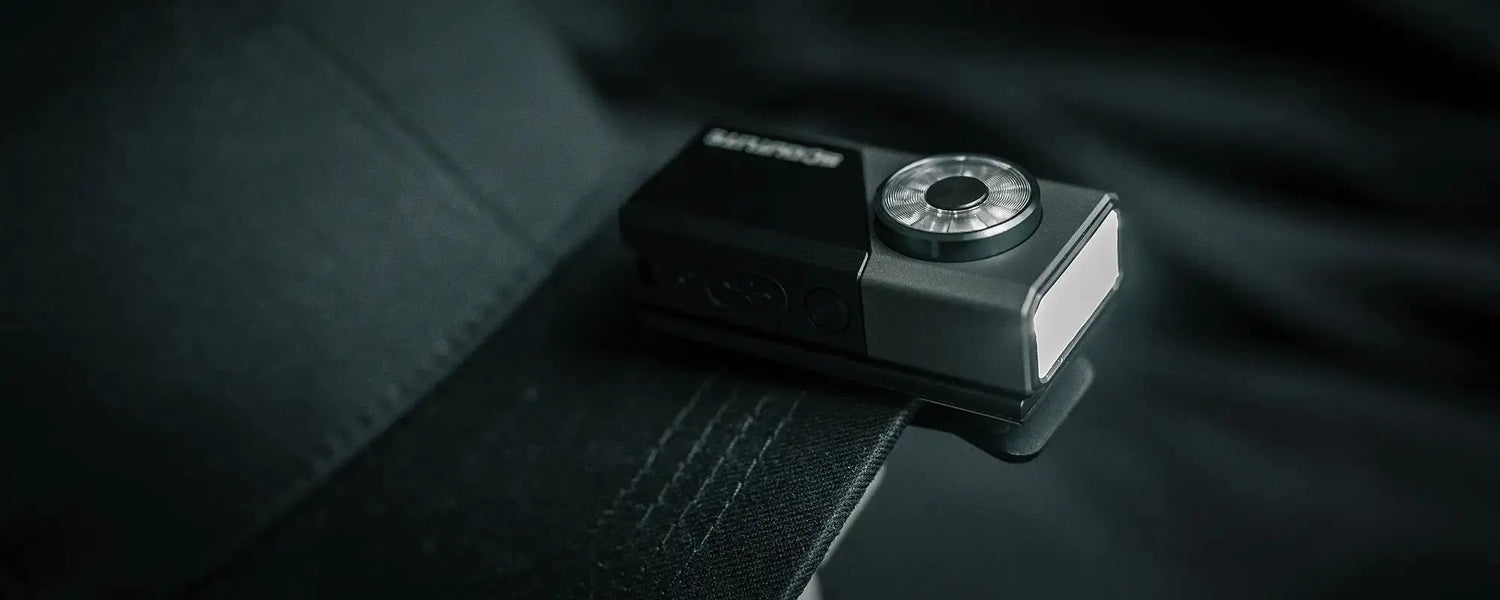
At its core, a clip-on flashlight is a compact light source designed with an integrated or removable pocket clip. Unlike a headlamp that just sits on your head, a clip light can be attached to a variety of places about your person — clothing, bag, straps or belts.
Many modern clip lights use built-in rechargeable lithium-ion batteries, and are measured in their range, throw and battery life. The idea of a good clip-on light is that it will be small enough to keep in your pocket, but powerful enough for serious work. The real sweet spot!
Why Choose a Clip Light over a Headlamp or Handheld Flashlight?
When you need to see in the dark, most people reach for a standard handheld flashlight or strap on a headlamp. While both are excellent products, they come with physical limitations that a clip-on flashlight is specifically designed to solve.
Clip-On vs. Handheld Flashlights: The "Free Hand" Advantage
The most obvious limitation of a traditional pocket flashlight is that it occupies one of your hands. This might be fine for a quick walk to the car, but for actual work, it's a major drawback.
- Multitasking: Whether you are a mechanic holding a wrench, a nurse recording a date and time on a chart, or a camper pitching a tent, you need both hands.
- Hand Fatigue: Carrying a heavy light source for a long period leads to cramping. A clip light removes the weight from your grip and places it on your bag, pocket, or lapel.
- Stability: Ever tried to balance a round flashlight on an uneven surface to light up a workspace? It inevitably rolls away. Because clip-on lights like the VARIO RGB 700 are often flat or have a magnetic back, they stay exactly where you set them.
Clip-On vs. Headlamps: Comfort and Etiquette
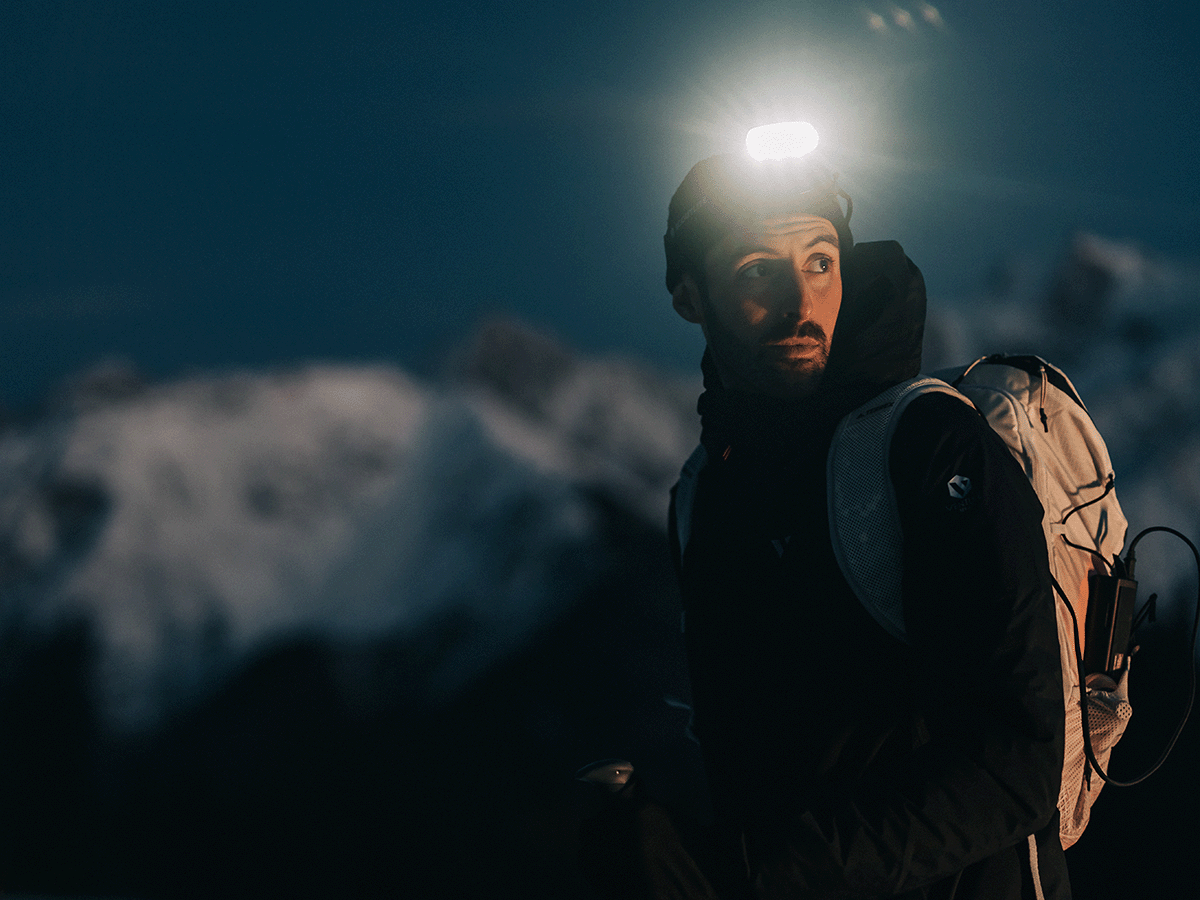
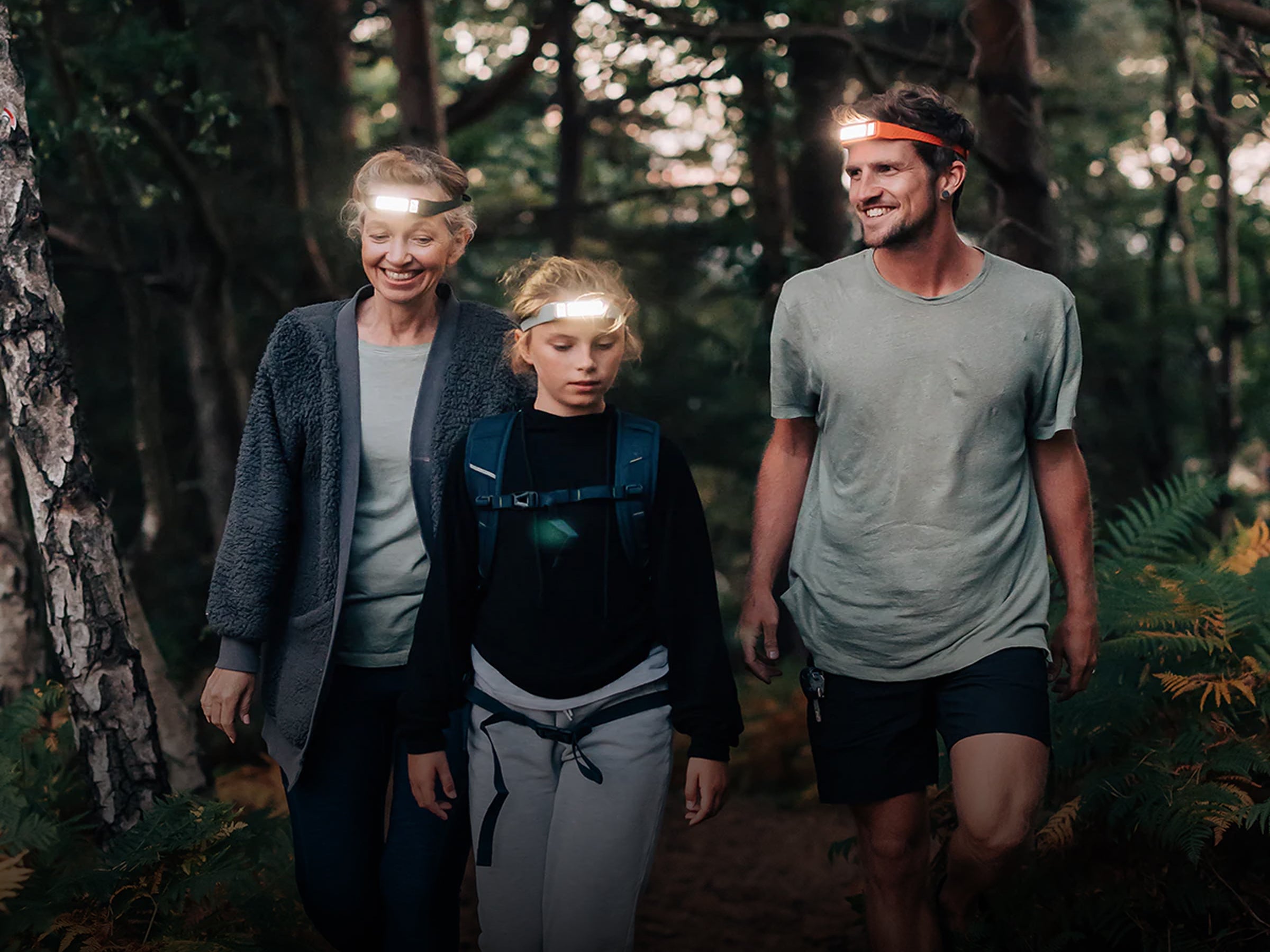
Headlamps have long been the preferred light for hiking enthusiasts, but they aren't always the best hands-free choice for daily life or professional applications.
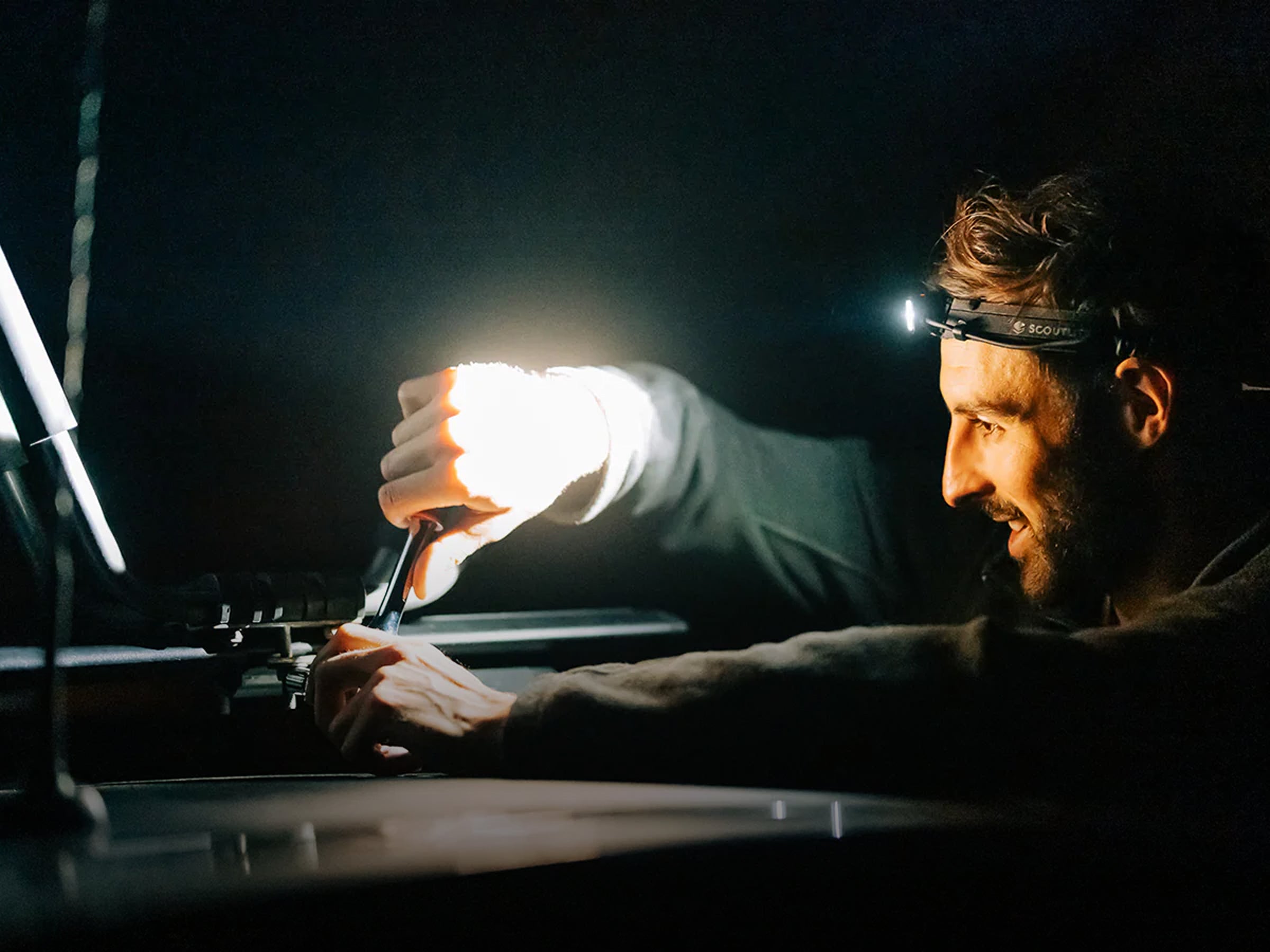
- The "Blinding" Factor: We've all been there — you turn your head to talk to a colleague while wearing a headlamp and accidentally blind them with 500 lumens. A clip-on flashlight attached to your chest or waist stays pointed at the work, not at people's eyes.
- Low-Profile Comfort: Headbands can be sweaty, leave marks on your forehead, and are difficult to wear with certain hats or helmets. A wearable light like the SparkO is so low-profile and lightweight (40g) that you can attach it to your shirt and forget it's there until it's needed.
- Discretion: Walking through a city or a hospital with a headlamp can feel "overkill." A clip light is a more subtle light source that provides high-utility illumination without the "spelunker" aesthetic.
When to Choose a Clip Light
Choose a clip-on flashlight when your work requires close-up accuracy, frequent hands-free movement, and a light that needs to be attached and moved quickly between a pocket, a desk, and metal surfaces.
What Features Matter Most in a Clip-On Flashlight?
There is a lot more to clip-on flashlights than meets the eye. You need to look beyond the stock photos and dive into the features. This can feel overwhelming if you don't know what you're looking for, so here's how to understand the specs:
1. Clip Geometry: Beyond the "Pocket Clip"
The clip isn't just an accessory; it's the primary interface between you and the light.
- The "Why": A "two-way" or "bi-directional" clip allows you to attach the light to the brim of a hat (turning it into a makeshift headlamp) or deep inside a pocket.
- The Detail: Look for "tension-rated" clips. If a clip is too loose, you'll lose your gear during high movement. If it's too tight, it will tear the fabric of your bag or clothing.
- Scoutlite Insight: The SparkO utilizes a magnetic clip system — a game-changer because it allows you to mount the light to metal surfaces, like a car hood or a fuse box, when there's nowhere to "clip" it.
The "Transformer" Clip: Mounting and Modularity
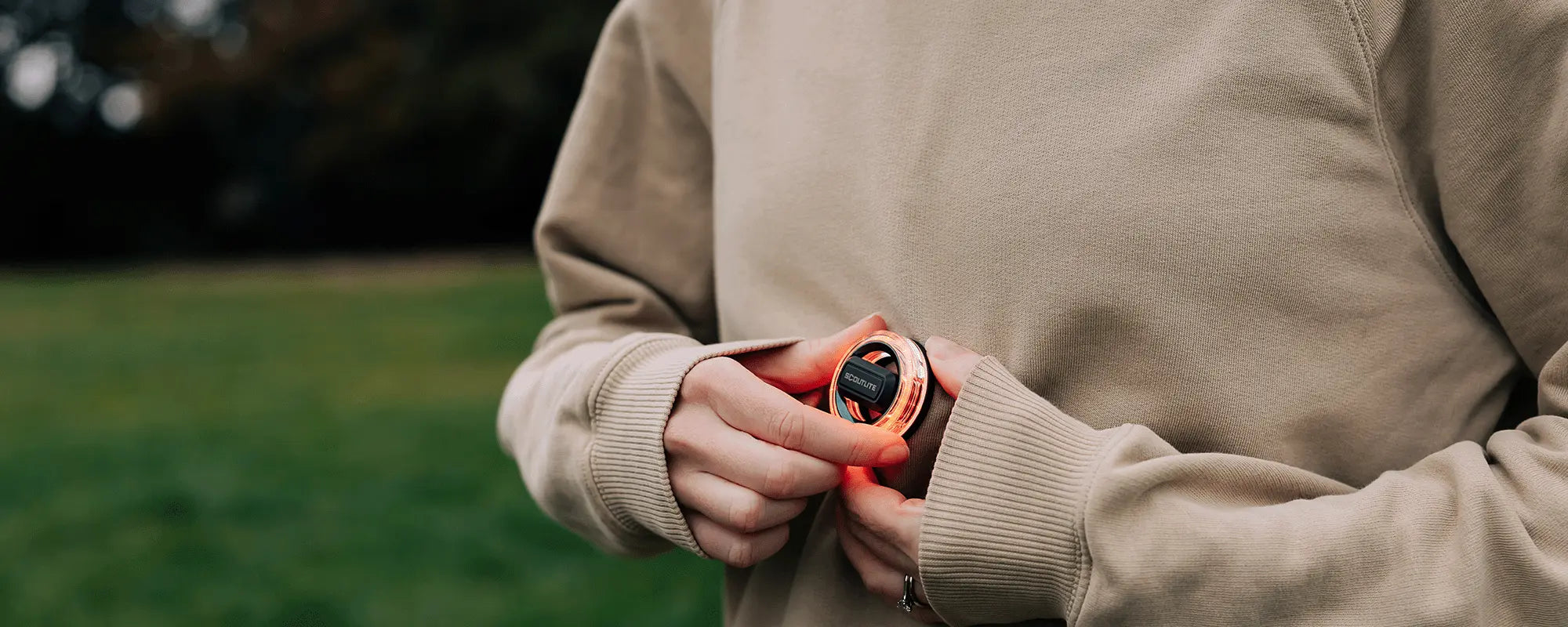
The VARIO RGB 700 takes clip design a step further with its detachable magnetic clip. This isn't just about attachment; it's about profile:
- Two-Way Mounting: The clip is reversible, allowing for "bezel-up" or "bezel-down" carry depending on your preference.
- Ultra-Slim EDC: Many clip lights feel bulky because the clip adds permanent width. By removing the VARIO's clip, the light becomes an ultra-thin 21mm flat light that disappears in a pocket.
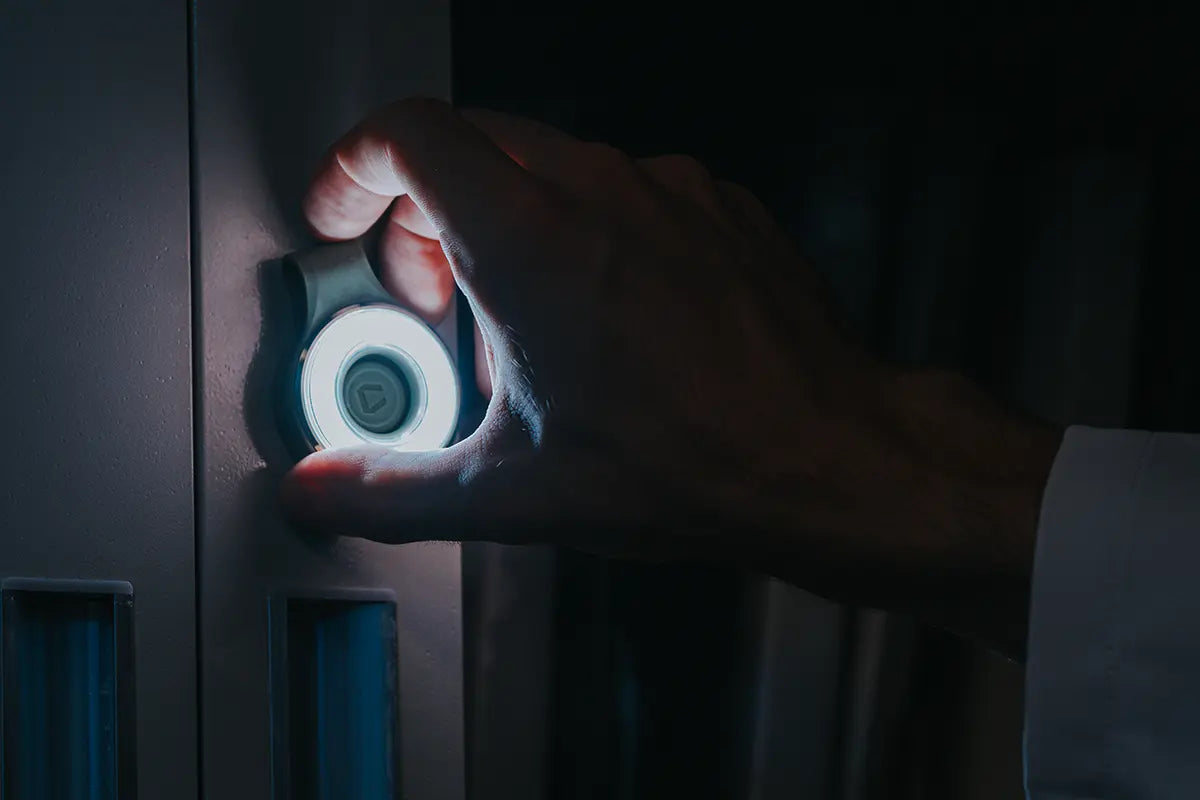
- Direct Magnetic Mounting: Removing the clip fully exposes the magnetic back, allowing for a flush, rock-solid attachment to metal surfaces.
Note: While the RGB ambient modes can reach a massive 95 hours, the main white light is built for performance — delivering 1.8 hours on High (700 lumens) and up to 10.5 hours on Low (40 lumens).
 2. Beam Pattern: Flood vs. Throw
Many beginners assume "more brightness" is always better. In reality, the shape of the light matters more than the raw measured lumens.
- The "Why": A "Throw" beam is like a laser; it's great for hiking to see a trail marker 100 meters away. However, for close-up work (like fixing a desk or reading), a "Flood" beam is superior.
- The Detail: A wide flood beam reduces "hotspots" — those blindingly bright circles in the middle of your vision that cause eye fatigue. For most hands-free tasks, a smooth, even wash of light is the goal.
3. Light Quality: CRI and Color Temperature
Most cheap products use low-CRI LEDs that make everything look grey or blue.
- CRI (Color Rendering Index): This measures how accurately a light reveals colors. If you are a mechanic looking for a rainbow-coded wire or a nurse checking a patient's skin, you need a high CRI (90+).
- Color Temperature (Kelvin): Cool White (6500K) is best for maximum brightness and alertness. Neutral/Warm (4300K-2700K) is easier on the eyes for long periods and better for cutting through fog or dust.
4. Battery Management and Driver Efficiency
A flashlight is only as good as its battery and the "driver" (the brain) that runs it. There's no point having the best flashlight in the world if you can only use it for 10 minutes at a time.
- The "Why": Many lights claim a high peak (like 700 lumens) but can only maintain it for 30 seconds before heat management causes a "step-down." A light that drops 50% of its brightness in two minutes isn't as useful as one that holds a steady, regulated output for an hour.
- What to look for: Check if a manufacturer provides sustained output figures. Sites like 1Lumen publish runtime graphs to show how a light actually performs over a full battery cycle. When you buy a Scoutlite, you aren't just getting a headline number; you're getting a tool tuned for consistent work over time.
5. Tactical Extras: UV, RGBW, and Side Lights
While many lights offer a simple red mode, the VARIO RGB 700 features a full RGBW side light module. It's important to distinguish between "fun" and "function" here:
- RGB Modes (Red/Green/Blue/Chase): These run at lower power and are designed for signaling, preserving night vision, or creative photography. They offer incredible longevity — up to 95 hours of ambient runtime.
- The White (W) Side Light: This is the hidden gem for professionals. It's a soft, neutral 4000-4500K beam that acts as a dedicated secondary work light. Unlike the main beam, which might be too "punchy" for reading or wiring, the side light provides a gentle flood perfect for close-up applications.

Did You Know? The Biology of Night Vision
When you step into the dark, your eyes can take 30 to 45 minutes to fully adapt. This happens because your eyes produce a light-sensitive protein called rhodopsin (visual purple) in your rod cells.
The Problem: A single flash of bright white light instantly "bleaches" this rhodopsin, resetting your night vision and leaving you essentially blind for several minutes.
The Solution: Human rod cells are virtually insensitive to long-wavelength red light. By using the red mode on a light like the VARIO RGB 700, you can illuminate your path while your eyes stay fully adapted to the dark. It's not just a cool feature — it's biology in action.
Who Uses Clip-On Flashlights, and Why?
It's a common misconception that wearable lights are purely for outdoor enthusiasts. That couldn't be further from the truth. Many people in different walks of life could benefit from a clip-on flashlight:
1. Professionals: Mechanics, Electricians, and Engineers
When you are working inside a dark engine bay or behind a messy server rack, you need a hands-free work light that stays put. A magnetic clip flashlight like the SparkO can be attached to a car hood or a metal panel, turning a cramped workspace into a well-lit environment.

2. Medical Professionals: Nurses and First Responders
In a hospital setting, low-light navigation is a constant challenge. Nurses use clip-on flashlights to read charts or check IV lines without waking patients. High CRI lighting allows for accurate skin tone checks and color-coded medication verification that standard lights simply can't match.

3. Outdoor Enthusiasts: Campers and Hikers
Clip it to a tent loop for an instant overhead light source, or to a bag strap during a late-afternoon hiking trip. With the wide range of light settings on the VARIO RGB 700, you can navigate the campsite without ruining your night vision.
4. Dog Owners: Safety During Late Walks
For anyone who has struggled to hold a leash, a poop bag, and a phone flashlight at the same time — the clip-on flashlight is a revelation. Simply attach it to the leash or your jacket pocket for constant visibility to traffic.
5. Runners and Night Walkers
Because they are so low-profile, these lights don't bounce around like heavy headlamps. Using the RGB signaling modes on a light like the VARIO can make you easily identifiable to drivers. For a deeper dive, see our guide to the best walking light for night walks.
6. Everyday Carry (EDC) & DIY Homeowners
From finding a dropped screw under the desk to navigating a power outage, an EDC flashlight with clip is the ultimate "just in case" tool. Its flat, compact design fits inside a jeans pocket or a small bag without adding bulk. For a wider look at the category, see our guide to the best EDC flashlight for your carry style.
The Specs That Matter More Than Most Buyers Realize
If you want to move from a casual user to a flashlight enthusiast, you need to look past the marketing numbers. Most buyers start and end with lumens, but a few less obvious specs often tell you more about how a clip light will actually feel in the dark.
Lumens vs. Candela: Total Volume vs. Focused Punch
This is the most common point of confusion:
- Lumens tell you how much total light the flashlight produces (the "volume").
- Candela tells you how intensely that light is focused into a single point (the "throw").
A light with high lumens but low candela, like the SparkO, will flood a nearby workspace with a soft, even glow — perfect for close-up tasks. A light with higher candela will reach much further into the distance, which is needed for hiking or searching a large backyard.
What is CRI, and Why Does it Change Everything?
CRI stands for Color Rendering Index, measured on a scale of 1 to 100. Standard LEDs often have a low CRI (around 70), which makes red look brown and skin look ghostly.
For nurses checking a patient's circulation or electricians identifying wire colors, high CRI is essential. The SparkO's CRI95 rating is extremely rare for a wearable light.
Regulated vs. Unregulated Output
Many cheap products are "unregulated" — they start very bright but gradually dim as the battery drains. A regulated flashlight uses a smart driver to keep the brightness stable. Whether your battery is at 90% or 20%, you get the same consistent light source. This is vital for professional work where you can't afford to have your vision slowly fade over time.
Quick Buying Checklist: Finding Your Perfect Match
Before buying a clip-on flashlight, ask yourself these questions:
- Where will you attach it most often? Shirt, pocket, hat, bag strap, belt, or metal surface.
- Do you need a flood beam or more reach? Flood is usually better for close-up work. More focused beams suit distance better.
- How important is color accuracy? If you work with wires, skin tones, maps, or detail tasks, high CRI is worth considering.
- Do you want magnetic mounting? Especially useful for workspaces, toolboxes, engine bays, and inspections.
- How long will you use it at a time? For longer sessions, runtime and consistent output matter more than peak brightness.
- Do you need extra modes? Red light, UV, or RGB may be useful, but only if they match your real needs.
- Will you carry it every day? If so, size, weight, and charging convenience matter a lot.
The best clip-on flashlight is not simply the one with the highest lumen rating. It is the one that fits your routine, your environment, and the kind of tasks you do most often.
Product Spotlight: The VARIO RGB 700
VARIO RGB 700
The All-Rounder for Modern EDC
"The VARIO isn't just a flashlight; it's a modular lighting multi-tool. It's the light for the person who hates 'pocket bulge' but needs a serious amount of utility."
Pros
- Versatility: UV, RGB, and neutral white side light — almost unheard of at this size
- Ergonomics: Flat shape prevents rolling; feels more like a remote than a bulky torch
- Build Quality: Detachable clip is sturdy with strong magnetic force
Considerations
- Learning Curve: Multiple modes (RGBW) take a few minutes to master
- Runtime Trade-off: 700lm high mode is battery-heavy; use lower settings for sustained work
Frequently Asked Questions
Are magnetic clip flashlights worth it?
Yes, especially if you often work around metal surfaces. A magnetic clip flashlight gives you more placement options — useful for mechanics, electricians, DIY jobs, and inspections. It also helps when there's nowhere practical to clip the light to clothing or gear.
How many lumens do I need for a clip-on light?
For most hands-free tasks — working at a desk, repairing a car, or hiking — 100 to 300 lumens is the sweet spot. While high-output modes (like the VARIO's 700 lumens) are great for short bursts, sustained lower brightness is usually better for battery life and preventing eye strain.
Can the magnets damage my phone or credit cards?
Modern smartphones are solid-state and generally unaffected by small magnets. Most credit cards use EMV chips which are magnet-safe. However, keep magnetic products away from older "swipe-only" hotel key cards or mechanical watches just to be safe.
Is a clip-on flashlight a good replacement for a headlamp?
Yes, for many cases. A clip-on flashlight is often better if you want to avoid the bulk of a head strap or need to turn your light into a stationary work light. However, for high-intensity movement like trail running, a dedicated headlamp still offers the most stability.
What is the advantage of a "Two-Way" pocket clip?
A two-way clip allows the light to be attached in two directions — clip it to your pocket pointing down, or flip it around to attach to the brim of a hat, effectively turning your clip light into a hands-free headlamp.
What does CRI mean in a flashlight?
CRI stands for Color Rendering Index. It tells you how accurately a light shows colors compared with natural daylight. Higher CRI is useful for tasks where color accuracy matters — checking wires, reading maps, inspecting materials, or carrying out close-up professional work.
Scoutlite Products at a Glance
Here's a quick comparison of two clip-on lights built for different needs:
| Feature |
SparkO The Specialist |
VARIO RGB 700 The All-Rounder |
|---|---|---|
| Primary Use | Professional Work & Medical | Everyday Carry (EDC) & Utility |
| Best For | Hands-free tasks, color accuracy | Maximum versatility, inspections |
| Max Brightness | 300 Lumens (CRI95) | 700 Lumens |
| Beam Profile | Soft, wide flood | Balanced beam with UV/RGB |
| Attachment | Magnetic Clip (Fabric & Metal) | Removable Clip + Magnetic Back |
| Special Modes | 4 Color Temps (6500K/4300K/2700K/Red) | UV (385nm) & RGBW Signaling |
| Battery / Port | 380mAh / USB-C | 1000mAh / USB-C |
| Weight | 1.41 oz (40g) — Ultra-Light | 2.26 oz (64g) — Compact |
| Water Resistance | IPX5 | IPX6 |