
In This Guide
Most lighting tools are designed around a simple assumption: that you'll always have a free hand.
In real life, that's rarely the case. Whether you're setting up camp after dark, fixing something in a tight space, heading out for an early run, or simply trying to see what you're doing without juggling a torch, traditional flashlights quickly become limiting. Headlamps solve part of the problem, but they're not always comfortable, subtle, or flexible enough for everyday use.
Wearable lights exist to fill that gap. Designed to be hands-free, lightweight, and easy to attach to clothing or gear, they provide practical illumination without getting in the way. Let's take a look at these fascinating devices in more detail.
What Exactly is a Wearable Light?
A wearable light is a hands-free, compact lighting tool designed to be worn on your body or attached to clothing. They solve the issues presented by flashlights and headlamps — they don't need to be held, and they don't need to be fixed to your head. Your hands are free to work, carry, or move around naturally.
It's all about convenience. You don't have to point a light from your hand or your forehead; wearable lights are much more flexible. They can be clipped to a jacket, a bag strap — wherever you need it. The good ones are also magnetic, so you can attach them to metal surfaces.
The Key Difference
Wearable lights are designed to be so lightweight that you can forget you're wearing them. They're compact and versatile — a purpose-built solution for moments when mobility and ease of use matter most.
Types of Wearable Lights
There are many different types of wearable lights, each designed with a specific situation in mind. They differ in how and where they can be mounted, but they all share the same main principle — hands-free illumination.
Clip-On Wearable Lights
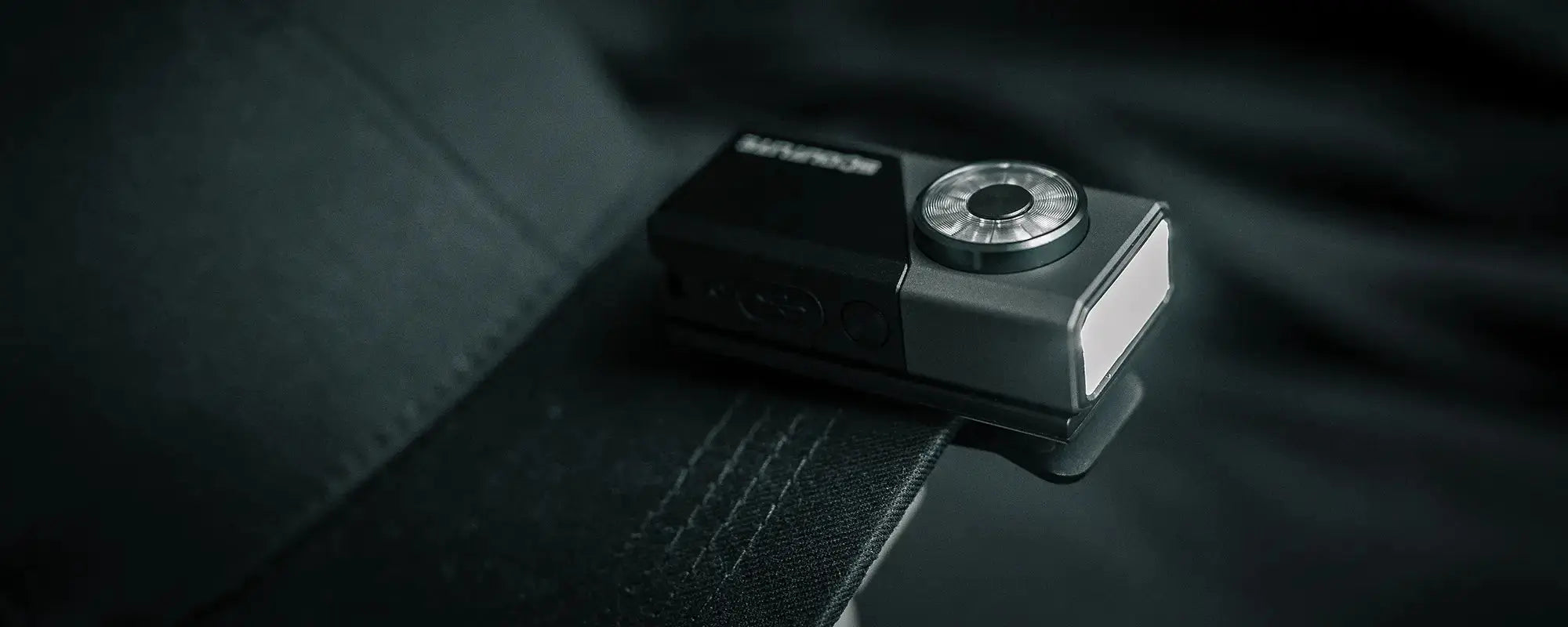
The most versatile option in the category. These use a pressure or spring clip to attach to clothing, backpack straps, or belts — meaning you get to choose where your light shines, without any impact on your movement. Perfect for camping, running, hiking, and any task that requires the light to move with your body.

Magnetic Wearable Lights
When you need precision and stability — like working under a car hood or on a fuse box — built-in magnets allow you to stick these lights directly to metal surfaces. Their real strength lies in hands-free positioning when you need precision and stability. Think vehicle maintenance or any task requiring temporary lighting in tight spaces.

Neck Lights
By resting comfortably around your collar, this design directs light forward using flexible arms. Neck lights are often favored for reading, crafting, or close-up work, particularly indoors. However, their fixed position and limited mounting flexibility can make them less adaptable in more dynamic or outdoor environments.

Wearable Safety Lights
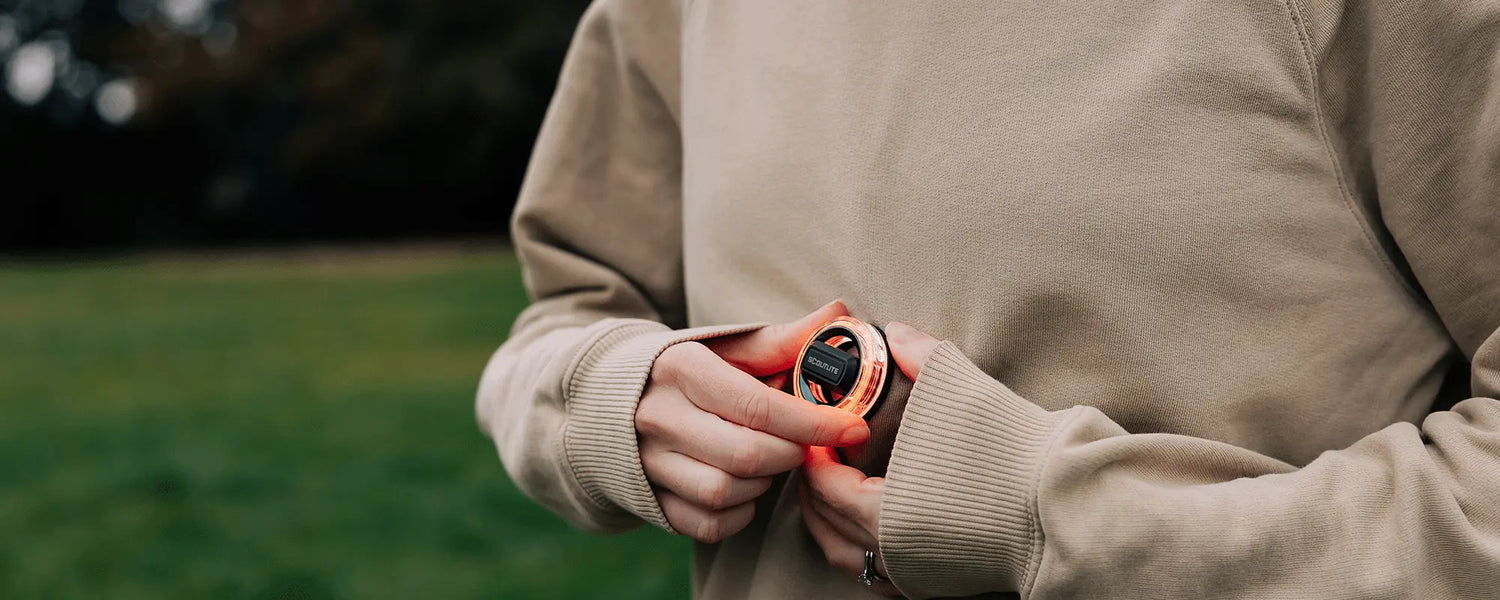
Primarily focused on visibility rather than illumination, these are essential for runners and cyclists who need to be seen by traffic. They tend to be lightweight and water-resistant, focused on steady or flashing modes rather than raw brightness. If you are comparing specific models, our wearable safety light comparison puts BlinkO, SparkO, and Guardian Angel side by side on weight, runtime, and price.

BlinkO: Visibility-First Design
A good example of a visibility-first wearable safety light is BlinkO, designed for runners, cyclists, and commuters who want to be seen after dark. If your main use is walking, our guide to the best walking light for night covers seeing versus being seen. BlinkO stands out for:
- 270° visibility angle with up to 20 lumens
- Dual red and yellow modes — yellow cuts through fog more effectively
- Clip or magnetic mount for flexible positioning
- Sync feature — multiple lights flash in unison when grouped
Multi-Mode Wearable Lights
Multi-mode wearable lights combine all the best qualities listed above in one gadget. They can clip onto clothing, attach magnetically, stand on their own, and offer safety light modes. Whatever you need hands-free lighting for, these adapt to your needs. Perfect for people with a wide range of hobbies, jobs, and interests — usually outdoors.
Who Uses Wearable Lights?
Wearable LED lights are used by a wide range of people, often in situations where traditional lighting feels awkward, impractical, or simply gets in the way. What connects these use cases isn't the activity itself, but the need for hands-free, adaptable light that works naturally alongside movement.
Night Workers
Checking patient vitals or inspecting warehouse inventory requires light that doesn't blind others. For security staff and nurses, a wearable light offers illumination without the aggression of a tactical flashlight.

Outdoor Enthusiasts
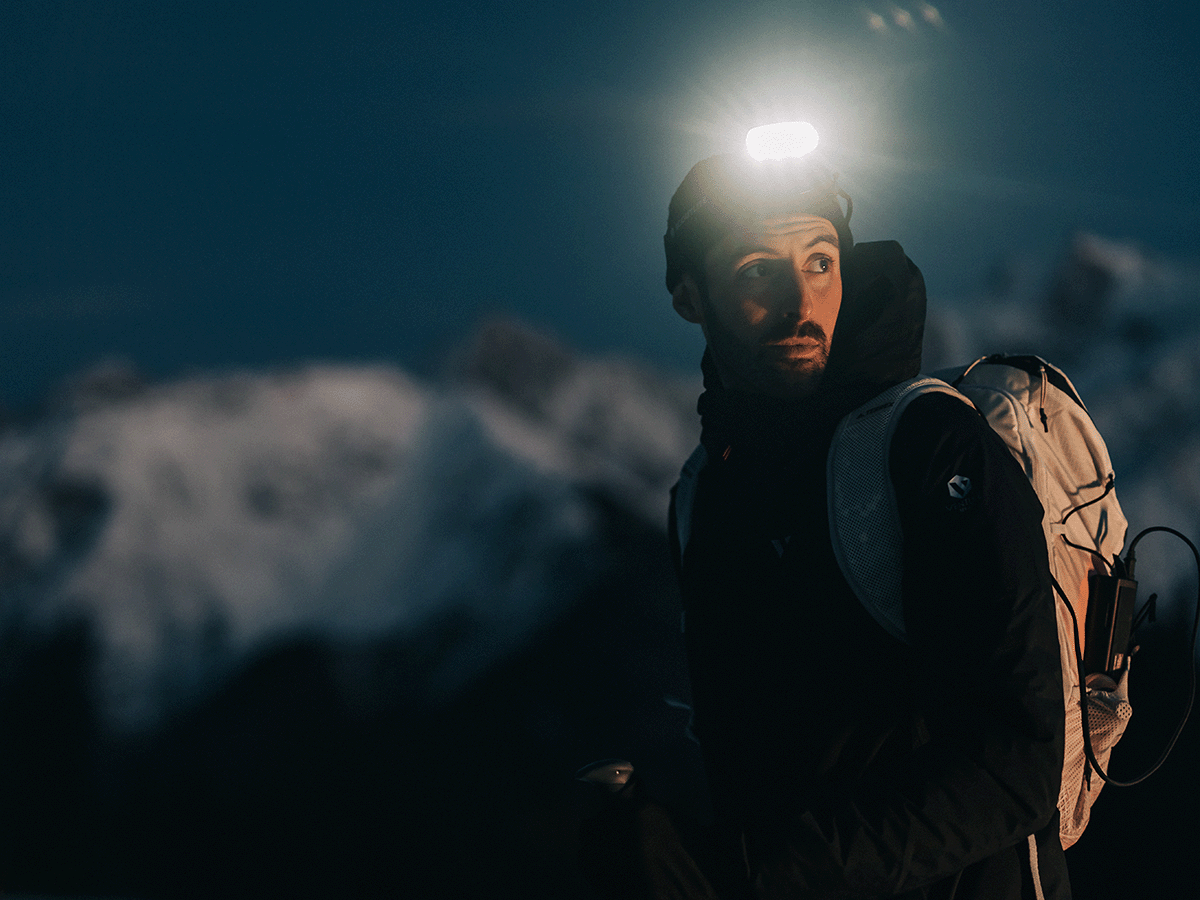
Setting up a tent or tying a fishing knot is significantly harder with one hand occupied. For outdoor lovers, keeping both hands free isn't just a luxury — it's a safety necessity on uneven ground.
DIY Users and Mechanics
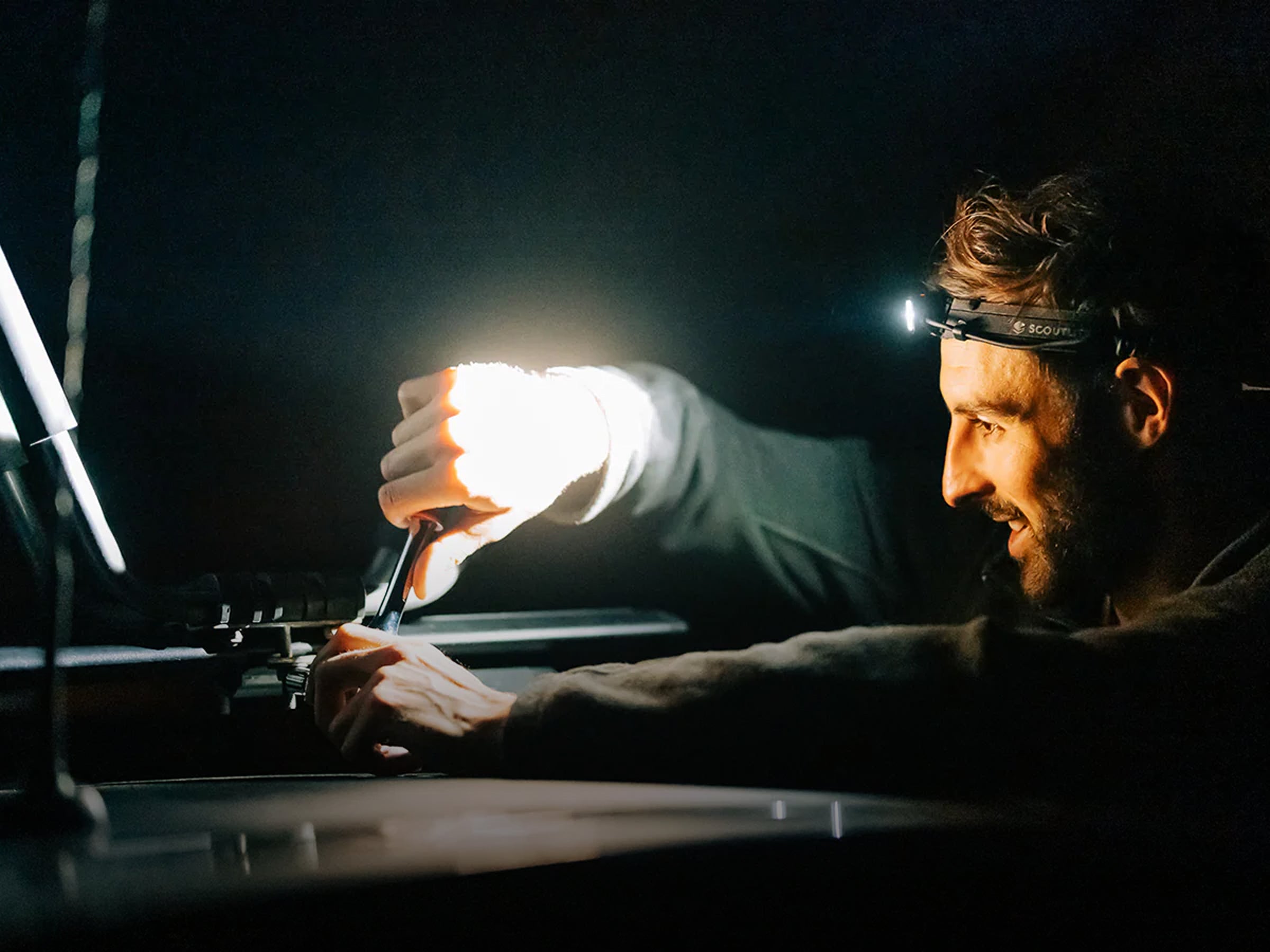
Tight spaces, awkward angles, and the need for two hands. A wearable light gets the light exactly where you need it, whether clipped to clothing, attached magnetically, or positioned nearby. It keeps both hands free to focus on the task in front of you.
Runners and Cyclists
For runners, cyclists, and dog walkers, wearable lights serve as a safety tool rather than task lights. Clipping onto clothes, they let vehicles know you're there when you're out at night.
Content Creators
Low-light environments can make filming tricky. Most creators don't have time or space for a full lighting setup, so wearable lights make the perfect portable, flexible light source.
Everyday Carry (EDC) Users
Small, functional, and ready-to-go, wearable lights fit naturally into the EDC mindset. Perfect for unexpected situations like power cuts or roadside checks. If you are weighing a wearable against a pocket torch, our EDC flashlight buying guide compares the formats side by side.
What to Look for in a Wearable Light
Wearable lights are designed for a wide range of uses, so there's a wide range of features available. Here's what to consider when choosing one for your needs:
Brightness (Lumens)
Don't fall into the trap of just chasing the highest numbers. Because wearable lights are used at close quarters, 1,000 lumens is overkill and will actually make visibility difficult. For most wearable uses, 100-300 lumens is the practical sweet spot — providing usable close-range light without excessive glare or rapid battery drain.
Color Temperature Options
Color temperature affects how light looks and feels. Cooler light (higher Kelvin values) appears brighter and more clinical. Warmer light creates a softer, more natural glow that's easier on the eyes. Wearable lights that offer multiple color temperatures are more adaptable.

CRI (Color Rendering Index)
CRI measures how accurately a light source shows colors compared to natural light. If you're distinguishing between colored electrical wires, checking if meat is cooked, or applying makeup, standard LEDs will wash out the colors. Look for a CRI 90+ rating to see true detail.
Why CRI Matters
Standard LEDs often have a low CRI (around 70), which makes red look brown and skin look ghostly. For nurses checking a patient's circulation, electricians identifying wire colors, or anyone doing detail work, high CRI is essential. A CRI95 rating — like the one found in SparkO — is extremely rare for a wearable light.
Mounting Versatility
The best light is useless if you can't put it where you need it. Avoid lights with only one clip type; look for "multi-mode" options that can stick to a car hood, clip to a pocket, or stand on a table. Greater mounting versatility allows a single light to adapt to different activities — this flexibility is what separates a truly wearable light from a simple clip-on flashlight.
Battery Life and Charging
A wearable light should offer enough runtime for extended use without frequent recharging, especially at lower brightness settings. Modern wearable lights typically use USB-C charging, which makes them convenient to recharge using common cables, power banks, or car chargers.
Durability and Water Resistance
Because wearable lights are often used outdoors or in active environments, durability matters. Water resistance ratings, such as IPX classifications, indicate how well a light can handle rain, splashes, or moisture.
Size and Weight
For a light to be truly wearable, it needs to be lightweight and compact enough to disappear into everyday use. A well-designed wearable light balances performance with portability.
Wearable Light vs Headlamp vs Flashlight
There is no "best" lighting tool — it all depends on what you're using it for. They all solve the same basic problem (seeing in low light), but they go about it in different ways.
| Feature | Wearable Light | Headlamp | Flashlight |
|---|---|---|---|
| Hands-Free | ✓ | ✓ | ✗ |
| Mounting Flexibility | High | Low | None |
| Comfort for Long Use | High | Medium | N/A |
| Portability | Excellent | Good | Good |
| Social Situations | Subtle | Awkward | Acceptable |
A flashlight is simple and familiar, but it takes up one of your hands at all times. Headlamps solve this problem, but they can feel bulky, and a fixed position on your forehead isn't always the most comfortable or effective position for your light.
Wearable lights bridge the gap between the two — hands-free illumination with flexible positioning options. Light that adapts to the moment without feeling bulky or overbuilt.
SparkO: A New Approach to Wearable Lighting
Now that you understand what makes wearable lights so useful, you'll be able to spot the difference between a basic clip-on light and one designed from the ground up with numerous uses in mind.
SparkO
Multi-Mode Wearable Light
"SparkO reflects how wearable lighting has evolved — toward flexible mounting, better light quality, and a design that fits naturally into modern life."
Key Features
- Multi-mode mounting: Clip to clothing, attach magnetically, or position as a selfie light
- Light quality: Up to 300 lumens with CRI95 color accuracy
- Multiple color temps: Warm to cool settings for any situation
- Ultra-lightweight: Just 40g — light enough to forget you're wearing it
Specs
- Charging: USB-C rechargeable
- Water resistance: IPX5
- Design: Compact enough to carry or wear without bulk
Frequently Asked Questions
Are wearable lights safe?
Absolutely. When used as intended, wearable lights are very safe. You need the same common sense considerations as with any lighting (avoid shining in people's eyes, follow manufacturer guidelines), but if you follow those, wearable lights are perfectly safe.
How long do wearable lights last?
In terms of runtime, wearable lights can vary depending on the model, brightness, and modes, but you should expect a quality wearable light to last for over 5 hours on one charge. In terms of product lifespan, a well-made wearable light should last for years with normal use.
Can I use a wearable light for running?
Yes. Many runners use wearable lights either as a visibility tool (so others can see you) or as a practical way to illuminate the ground ahead. For running, look for a light that's lightweight, easy to secure when clipped to clothing, and offers a mode that works for your environment.
What's the difference between a wearable light and a clip-on flashlight?
A clip-on flashlight is usually a small flashlight that happens to have a clip. A wearable light is designed specifically to be worn or mounted in different positions, with hands-free use as the priority.
Are wearable lights waterproof?
Some are, but it depends on the rating. Many wearable lights are water-resistant, meaning they can handle rain, splashes, or sweaty conditions. Look for an IPX rating — higher ratings generally mean better protection against water exposure.
What is CRI and why does it matter?
CRI stands for Color Rendering Index. It measures how accurately a light shows colors compared to natural daylight. A high CRI (90+) is important for tasks where color accuracy matters — like checking wires, inspecting materials, or any close-up professional work. SparkO's CRI95 rating is extremely rare for a wearable light.
Conclusion
Wearable lights exist for the moments when traditional lighting feels like a compromise. They're hands-free, lightweight, and easy to position — perfect for a wide range of activities and tasks. They give you something that headlamps and flashlights can't: flexibility and freedom of movement.
If you're choosing a wearable light, prioritize mounting versatility, comfortable weight, and practical brightness over extreme output. And if you want a clear example of how the category has evolved, take a look at SparkO.