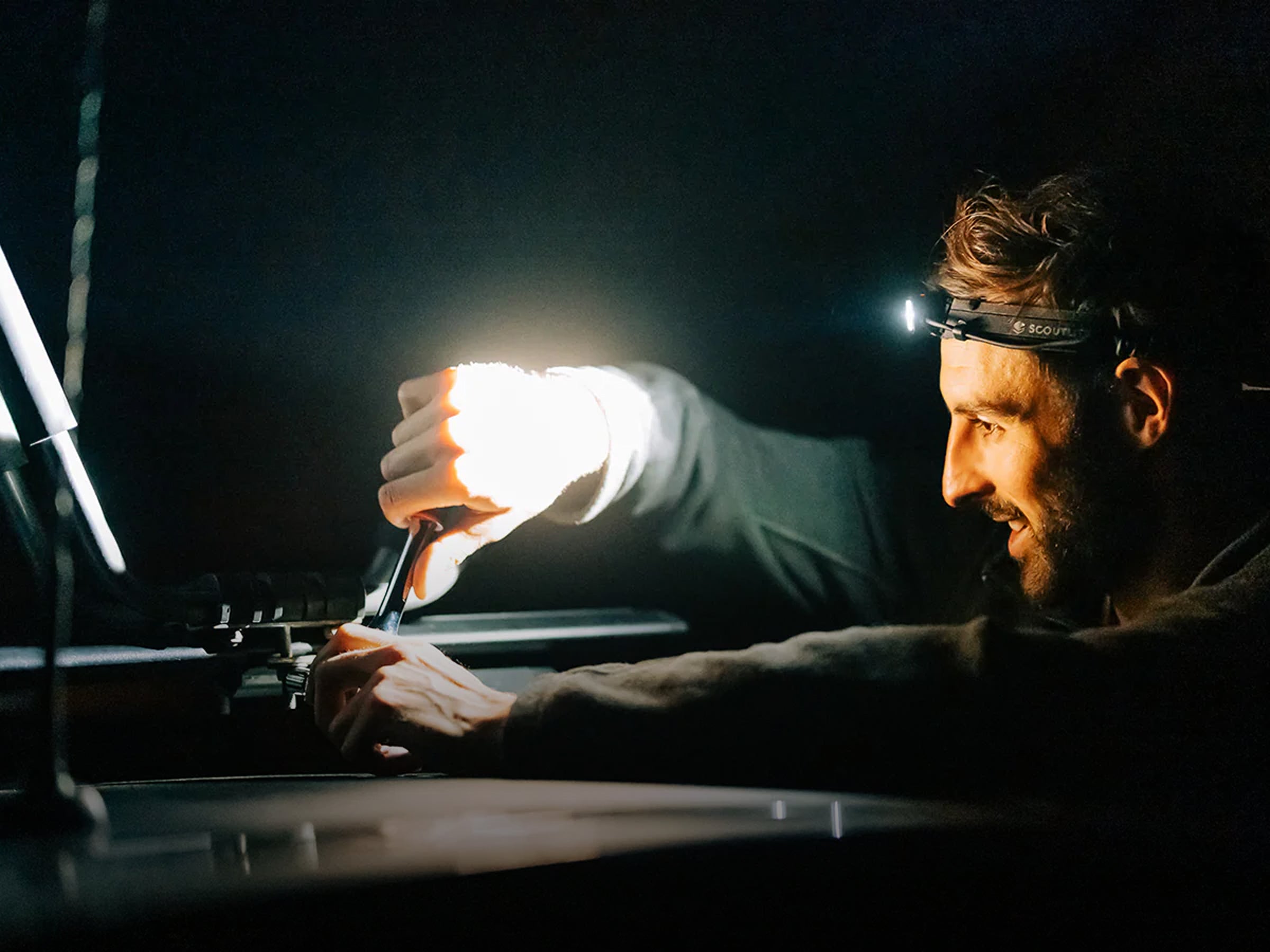


Picture one of these scenes: you're leaning over a dark engine bay, precariously balanced on a step-ladder behind a boiler, or desperately trying to make sense of a chaotic series of wires in a fuse box. The lighting is making a tricky job even more frustrating. You need a flashlight. And your first instinct is to reach for the most powerful one available.

The logic is something like this: no light is bad, so the solution must be the most light possible.
But that logic is flawed.
When shopping for a magnetic flashlight, the biggest (and heaviest) mechanic work lights are rarely what we need. Experienced professionals and gear enthusiasts will tell you — brute force is a poor substitute for visual clarity. You don't need something to light up a football field.
In this guide, we'll cover exactly what you do need from a magnetic flashlight, walk through different uses, and talk through specific options. You might be surprised at what's available, and how sometimes the smaller gadgets can have the biggest impact on everyday tasks.
In This Guide
What Most People Get Wrong About Magnetic Flashlights
The "Lumen War" has done a disservice to the average user. You know the products — often sold at gas stations, boasting thousands of lumens for a few bucks, made by brands you've never heard of. They sound like a bargain, until you use them in the real world and discover that a high-output mechanic light is a nightmare in tight spaces (and the battery life leaves a lot to be desired).
Area Lighting vs. Task Lighting
- Area Lighting (large magnetic bars) is for lighting up a room or wide workspace from a fixed position.
- Task Lighting (compact, wearable magnetic lights) is for doing the work — close-range, precise, hands-free.
If you've ever tried to use a 2,000-lumen light inside a kitchen cabinet, you know the result: blinding glare, washed-out details, and eye strain that makes the job take twice as long.
Bigger And Brighter Are Not Always Better
In a workspace, "Too Much Light" is a real thing. When you are working at arm's length, 1,000+ lumens reflecting off a white PVC pipe or a metallic engine component creates a "hotspot" that actually obscures your vision.

On top of that, weight is a factor that is almost universally ignored in online reviews. Many magnetic work lights found online are heavy, 500g "bricks." While they have strong magnets, they are cumbersome. They are lights you set up.
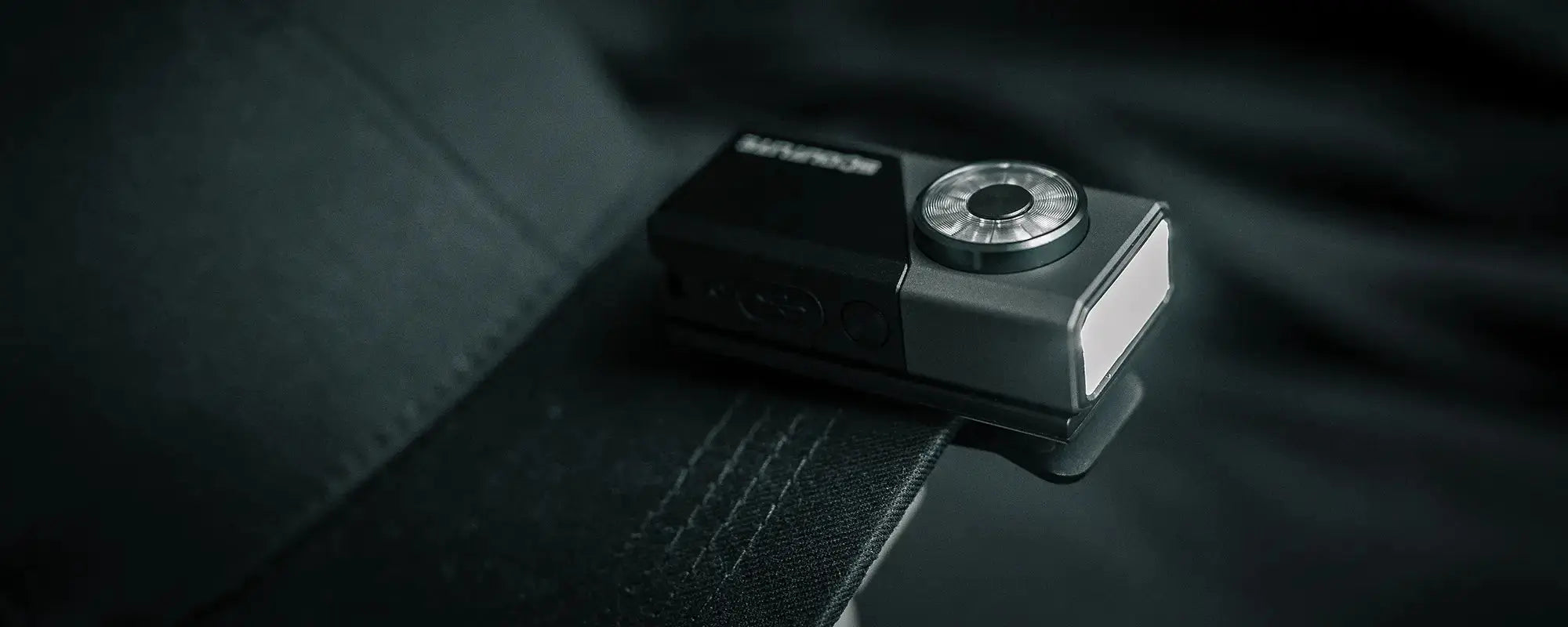
But what about the light you carry? A hands-free work light that weighs only 40g — like the Scoutlite SparkO, a recent Kickstarter success that raised over $200,000 by specifically tackling the weight-vs-utility problem — represents a completely different category of gear. It isn't just a gadget; it's a market-validated answer to the "heavy light" dilemma. It's the difference between a tool that stays in your toolbox and a tool that lives on your shirt collar, ready to use the second you need to check a fluid level or find a dropped screw in a dark footwell.

Light Quality vs. Light Quantity: Why CRI Matters More Than Lumens
What Is CRI?
CRI stands for Color Rendering Index — the measure of how accurately a light reveals colors compared to natural sunlight. It's defined by the CIE (International Commission on Illumination) on a scale of 0 to 100, where 100 represents perfect color reproduction. A CRI of 90 or above is the same standard used in professional photography lighting and surgical suites.
Many budget work lights use lower-CRI LEDs, often around the 70 CRI mark. When a light source drops below the professional threshold, the illumination feels "flat" and often carries a distracting bluish tint. In a shop or garage, this has real consequences:
- The Wire Test: If you're a mechanic or electrician trying to tell a dark red wire from a brown one, a low-CRI light can make them look identical.
- The Leak Test: Spotting an oil sheen or a subtle fluid stain requires depth and color accuracy that low-CRI lights simply can't deliver.

The SparkO features a CRI95 rating. This means that even at a lower brightness, you see more detail because the colors are saturated and true. It makes the work feel "high definition."
Why Color Temperature Matters More Than Most Buyers Realize
Color temperature — measured in Kelvin (K) — is one of the least discussed specifications in lighting, yet it directly affects task performance and eye strain. Different temperatures suit different working environments:
- Cool White (6000K+): Feels crisp and "brightest" to the eye. Great for wide-area checks and staying alert.
- Neutral to Warm White (4000K–2700K): The optimum range for close-up work. Many users find warmer light easier on the eyes for sustained detail work.
- Red Light Mode: A staple in the EDC and mechanic community. Because red light doesn't cause your pupils to constrict, it preserves your night vision — ideal for reading a map in a dark vehicle, navigating a campsite, or performing a quick check in a server room without resetting your "night eyes."
More Modes = More Utility
Having a magnetic flashlight that offers multiple color temperatures isn't a gimmick. It's how you tune your tool to the environment. A light that only does one thing will always fall short for half your jobs.
Beyond Mechanics: The Universal Need For Hands-Free Light
We've focused on mechanic work so far, but a work light can benefit many different types of people with very different jobs. Here are some of the more common — and sometimes overlooked — use cases.
1. Emergency Roadside Repairs
A flat tire or a dead battery in the middle of the night. A standard flashlight is useless when you need both hands to operate a jack or attach jumper cables.
The utility: The magnetic back lets you attach the light directly to the underside of the hood or the side of the vehicle. It eliminates the shadows that usually haunt roadside repairs and keeps the light in position even if the car is jacked up.
2. Dog Owners and Evening Walkers
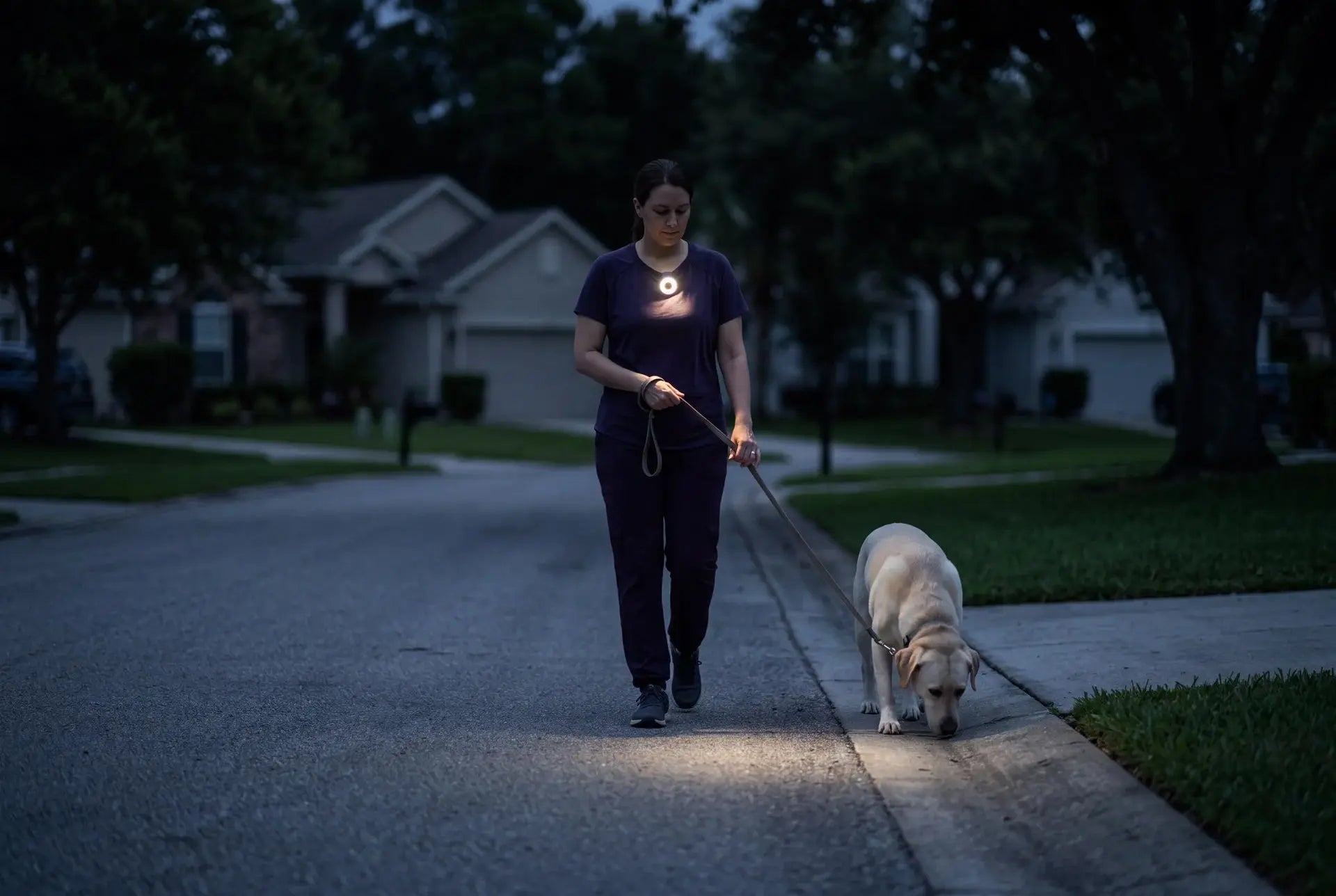
If you've ever tried to navigate a leash, a phone, and a waste bag at the same time, you know that a "third hand" changes everything.
The utility: Clip the light to a jacket zipper or a leash handle. It provides enough brightness to see the path ahead and makes you visible to passing cars without the bulk of a heavy headband.
3. The Professional Trades: Electricians, Plumbers, and HVAC
For those working inside a dark cabinet or behind an industrial furnace, space is at a premium.
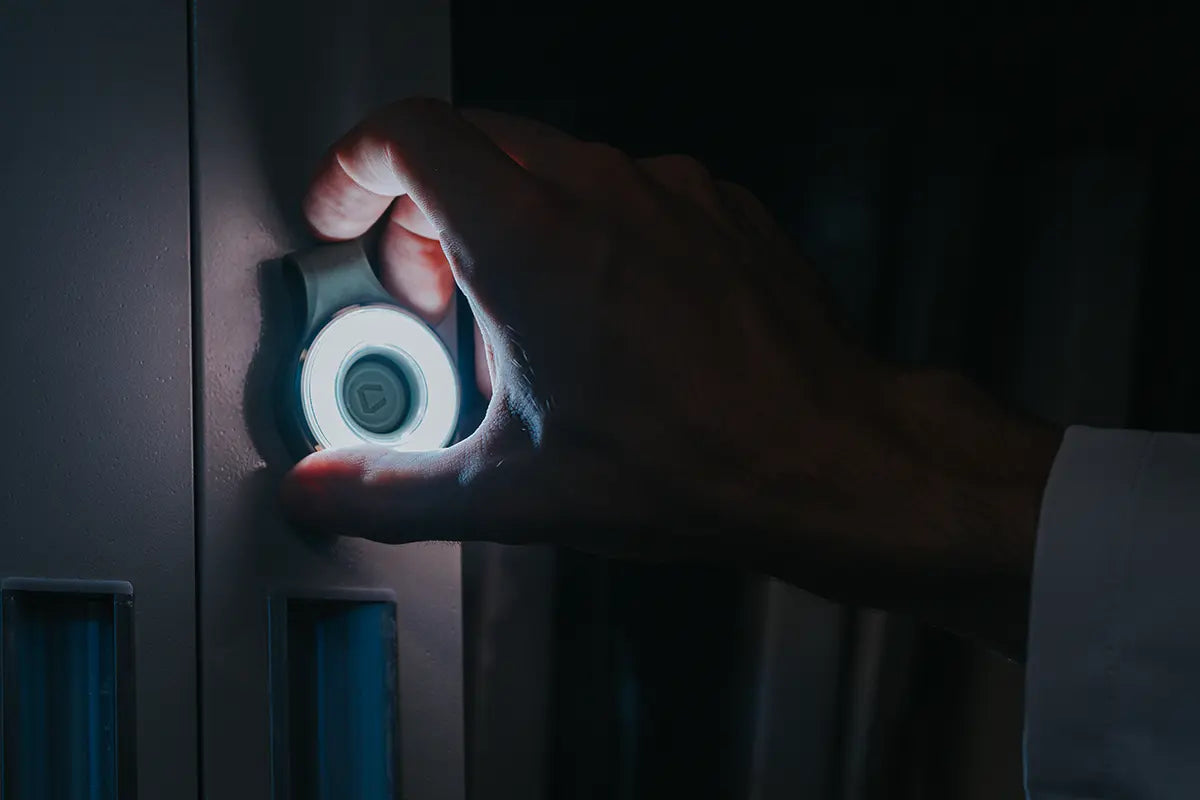
The utility: Unlike a heavy bar light that requires a wide base, a compact light can attach to a single metal pipe or a screw head. The CRI95 light quality ensures an electrician isn't guessing which wire is which in a cramped box.
4. Healthcare: Nurses and Home Carers
Working a night shift requires a delicate balance of visibility and discretion.
The utility: A light clipped to scrubs, used on the low-output warm setting, lets nurses check on a patient or review a chart without the harsh glare of overhead LEDs waking the entire ward.

5. Hobbyists, Makers, and Crafters
Whether you're building a model, sewing, or repairing a piece of jewelry, light placement is everything.
The utility: Standard desk lamps create harsh shadows because they only come from one angle. A magnetic light lets you position the beam exactly where the detail is, without the discomfort of a headlamp.
6. Home Maintenance
From searching the loft for holiday decorations to finding a dropped item under the sofa, the "quick check" is the most common reason people reach for a light.
The utility: Because it's rechargeable via USB-C, there's no hunting for disposable batteries. It's small enough to live in a kitchen drawer but capable enough for the darkest corners of a shop or garage.
How Many Lumens Do You Really Need For A Work Light?
Marketing departments would have you believe you need 5,000 lumens to see a bolt in an engine bay. In practice, there's a clear point of diminishing returns — and more brightness can actually be a hindrance in tight, reflective environments.
Lumen Ranges For Real Work
- 10–50 Lumens (Low): Reading a manual, checking a fuse box, navigating a dark hallway without waking others.
- 100–300 Lumens (Mid): The Goldilocks zone for most DIY and mechanical tasks. Enough to eliminate shadows without causing blinding glare.
- 500+ Lumens (High): Area lighting — illuminating an entire shop or a large outdoor workspace.
For most close-up tasks, a magnetic flashlight that produces 300 lumens at high CRI is far more useful than a 1,000-lumen light that washes everything out.
Magnetic vs. LED vs. Rechargeable Work Lights: What Actually Matters
Most "best work light" searches lump three things together: a magnetic work light that sticks to metal, an LED work light chosen for efficiency and runtime, and a rechargeable work light you top up over USB-C instead of swapping batteries. The good news is you do not have to choose between them. The qualities that matter most, a high-CRI LED for true color, a clean wide beam, a strong magnet, and USB-C charging, are shared across all three. Prioritize light quality and a secure magnetic mount over raw lumens, and one compact light handles the magnetic, LED, and rechargeable jobs at once.
What Is The Best Magnetic Work Light?
"Best" is subjective. To find the right tool, it helps to understand that magnetic work lights split into two fundamentally different categories.
Type 1: The "Setup" Light
The area flood — large rechargeable bars found in professional shops

"Great when you're staying in one spot for an hour. Less useful when the job requires movement."
Pros
- High output: Illuminates a wide workspace effectively
- Stable: Strong magnets hold it firmly to large flat surfaces
Considerations
- Weight: Bulky and awkward in tight spaces
- Shadows: Mounted far from the work, which creates shadows at the exact point you need light
Type 2: The Wearable Task Light
The precision tool — compact, wearable, built to move with you
"Because it lives on your shirt or hat, the light moves with you. If you go from the engine bay to the interior, the light comes too."
Pros
- Lightweight: 40g — you forget it's there
- High CRI: CRI95 for accurate color in tight spaces
- Versatile mounting: Clips to clothing, hats, or any metal surface
Considerations
- Lower peak output: Not designed for large area lighting
Quick Buying Checklist
Before you buy, ask yourself these seven questions to avoid a "spec-sheet" mistake:
- Weight — will it stay on a shirt collar? If it's too heavy for wearable use, it's a "setup" light, not a task light.
- Beam Shape — smooth flood or focused thrower? For close work, a smooth flood reduces glare. A narrow thrower is too intense at arm's length.
- Color Quality — is the CRI 90 or above? Essential for wiring, leak detection, and any job where color accuracy matters.
- Magnet Placement — tailcap or side-mount? Tailcap magnets are more versatile; side-mount suits specific surface types.
- Charging — does it use USB-C? The modern standard. Avoid lights that still rely on proprietary cables or disposable batteries.
- Battery Life — how long in "Medium" mode? You'll rarely run at max. What matters is runtime at the brightness you'll actually use.
- Price — does it balance with how often you'll use it? A light you reach for every day is worth more than a seldom-used shelf piece.
Final Thoughts
The best magnetic flashlight is the one that stays out of your way and lets you work free of frustration. By moving away from the "biggest and brightest" myth, you can find a tool that prioritizes light quality, weight, and wearability over raw output numbers.
Once you experience the difference between a bulky mechanic light and a high-CRI, lightweight wearable light, you'll realize that the "best" light isn't a trophy for your toolbox. It's the one that makes the hardest jobs feel a little bit easier.
FAQs
How many lumens do I need for a work light?
For most close-up jobs, around 100 to 300 lumens is enough for inspections, repairs, and DIY tasks without creating too much glare. Higher output can be useful for wider area lighting, but more lumens are not always better in tight spaces.
Will the magnets in my work light damage my smartphone or laptop?
For most modern phones and laptops, a flashlight magnet is unlikely to damage data. That said, it's wise to keep strong magnets away from sensitive accessories, magnetic stripe cards, and mechanical watches.
What is the best magnetic work light?
It depends on the task. For broad area lighting, a large magnetic bar is ideal. For detailed inspections, wiring, and moving through tight spaces, a compact, high-CRI wearable light like the Scoutlite SparkO is superior. The most common feedback? It's so light you forget you're wearing it.
What is CRI and why does it matter?
CRI (Color Rendering Index) measures how accurately a light reveals colors. A high CRI (90+) is practical and necessary for telling wires apart or spotting fluid leaks that a cheaper, low-CRI light would hide.
I'm working on a modern car with an aluminum hood. Will a magnetic light still work?
Aluminum, carbon fiber, and high-end plastics are non-magnetic, so a standard tailcap magnet won't stick to modern body panels. This is exactly where a wearable light wins — you can clip it to your clothing or a plastic trim piece and get the same hands-free benefit without needing a metal surface.
Why does my 1,000-lumen light feel "dimmer" than a 300-lumen high-CRI light?
It sounds like a paradox, but it's all about contrast. A cheap, low-CRI light washes out the environment with blue-tinted light, making everything look flat. A high-CRI light reveals the true depth and texture of a surface. To your brain, the quality of the light makes it easier to see detail — which feels more effective than raw, blinding brightness.
How do I clean my magnetic light after it gets covered in oil or shop chemicals?
Most high-quality mechanic lights are rated IPX4 or higher, meaning they can handle a wipe-down. Use a microfiber cloth dampened with a mild degreaser, and avoid harsh chemicals like brake cleaner directly on the lens — it can cloud the plastic over time.
Can I use a magnetic light as a headlamp in a pinch?
Absolutely. If your magnetic flashlight has a two-way clip, you can attach it to the brim of a hat. Because a light like the SparkO is so light, it won't pull the hat down over your eyes — giving you a practical hands-free solution even when there are no metal surfaces nearby.
Can magnetic flashlights scratch car paint?
The culprit is almost always a tiny piece of metal grit or road grime caught between the magnet and the paint. The fix is simple: always lift the light and place it directly down — never drag it across the surface. Give the magnetic base a quick wipe before it touches the paint. Or better yet, clip the light to your clothing and skip the risk entirely.