

In This Guide
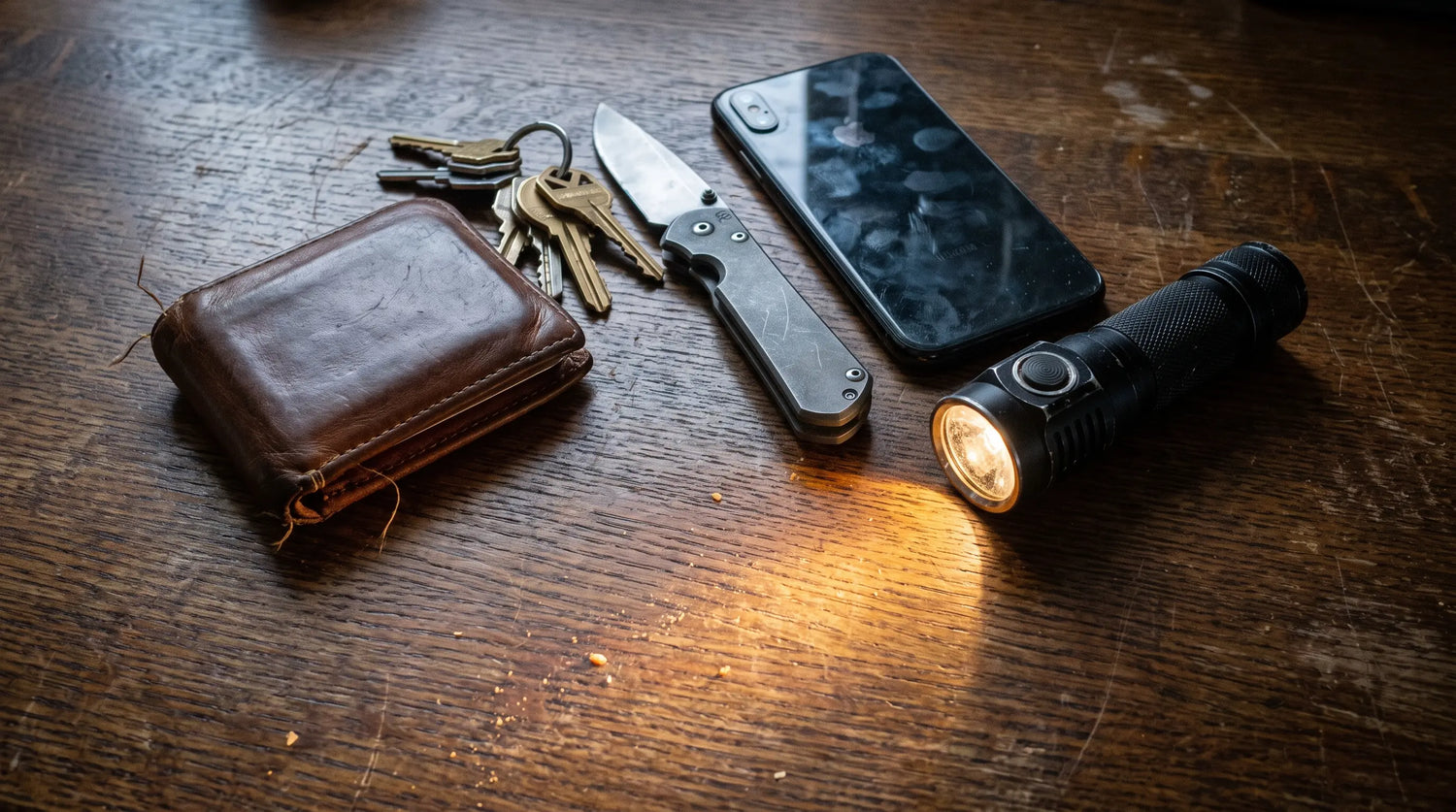
Your pockets are already doing a lot of work. On any given day, a flashlight is competing for space against your smartphone, wallet, keys, pocket knife, and whatever else you carry.
Pocket real estate is limited. Anything you carry every day needs to earn the space and weight it takes up. If a tool feels uncomfortable or annoying to use, it inevitably gets left behind on a nightstand.
When shopping for an everyday carry light, it is easy to get seduced by headline numbers. Manufacturers love to brag about peak output. The Nitecore T4K is a good example. It produces a claimed 4,000-lumen maximum output from a keychain-sized body, which is impressive engineering. But that figure alone does not tell you whether it will suit your pocket, your routine, or the jobs you actually use a light for.
This guide looks past the headline numbers and focuses on what makes an EDC light worth carrying.
A 4,000-lumen turbo burst sounds great on paper, but output alone does not mean much if the controls cause accidental activation in your pocket, the clip loses tension, or the beam washes out details on close-up tasks.
The best EDC flashlight is not automatically the smallest, brightest, or most expensive option. It is the one that fits comfortably alongside your existing gear, stays charged, has intuitive controls, and delivers useful light for real-world situations.
What Makes a Flashlight Good for Everyday Carry?
An everyday carry flashlight is fundamentally different from a tactical torch or a heavy searchlight. It is designed for regular carry and spontaneous use.
The best EDC tools justify themselves through frequent small uses rather than rare dramatic moments. You might use yours to look for a dropped bolt under a car seat, check a breaker box during an outage, read a faded shipping label, or navigate a dark parking lot.
To judge whether a light deserves a spot in your rotation, ask five simple questions:
- Will you carry it? Size and shape matter more than they appear to on a specification sheet.
- Will it stay put? A weak clip can turn an expensive light into lost gear on the trail or in a parking garage.
- Can you operate it quickly? You should not need to remember a complex sequence of clicks in the dark.
- Is the beam useful? A smooth, wide pool of light often matters more than a fierce, blinding hotspot.
- Will it stay charged? The best charging system is the one you will use regularly without hunting for custom cables.
The Best EDC Flashlight Is the One You Will Actually Carry
Pocketability Is More Than Length and Weight
When evaluating how a light carries, overall shape matters just as much as dimensions on paper.
Traditional cylindrical flashlights are the industry standard, but thicker round tubes are not always the most pocket-friendly shape. A thick round light sitting at the bottom of a front pocket creates a noticeable bulge that can press uncomfortably into your thigh while driving or sitting at a desk.

Different flashlight profiles handle this carry problem in distinct ways:
- Traditional cylindrical lights: Offer a familiar grip and mature optical designs, though thicker models can create noticeable pocket bulge.
- Flat flashlights: Tend to sit closer to the body or pocket wall, which can make them feel less bulky than a thick round tube alongside a smartphone while preventing the light from rolling off a workbench.
- Wearable or right-angle lights: Provide hands-free utility by clipping to clothing or equipment straps, though forward lighting requires holding the body at an angle.
- Keychain lights: Offer minimal weight for backup tasks, but sacrifice battery capacity and sustained output.
A Few Extra Ounces Feel Different by Lunchtime
A difference of an ounce or two seems minor online, but extra weight becomes noticeable after eight hours in jeans or slacks. Heavy gear drags on fabric and shifts awkwardly as you walk.
You do not need to chase the lightest product at all costs. But the extra weight needs to give you something back, whether that is longer runtime, tougher construction, or features you genuinely use.
Keychain Light, Pocket Light, or Wearable Light?
Choosing the right format comes down to how you prefer to carry your gear:
Keychain Lights
- Best for: Minimalist carry, emergency backup, or people who refuse to carry a dedicated pocket tool.
- Trade-offs: Small battery capacity, cramped controls, and limited output before stepping down to prevent overheating.
Dedicated Pocket Flashlights
- Best for: Balanced daily performance, higher sustained output, longer runtime, and a comfortable full-hand grip.
- Trade-offs: Requires dedicated pocket space and relies heavily on clip quality.
Wearable and Right-Angle Lights
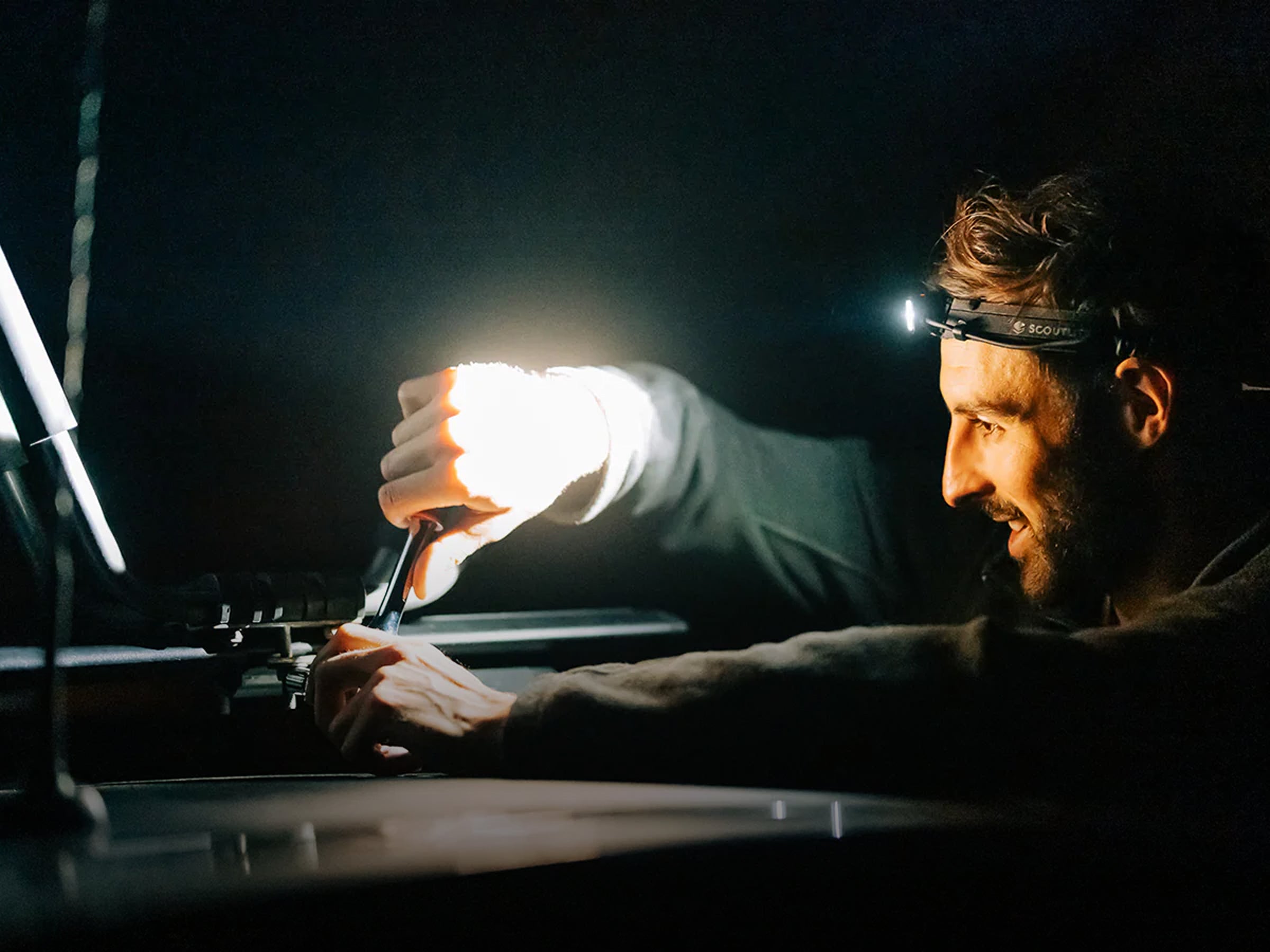
- Best for: Hands-free tasks, close-up work, clipping to shirt collars or backpack straps, and magnetic surface mounting.
- Trade-offs: Forward-pointing illumination requires holding the body at an angle or relying on clothing attachment.
Readers who prefer a hands-free setup can explore our full guide to clip-on flashlights and wearable clip lights.
The Pocket Clip Is Not a Minor Detail
You notice a bad clip quickly. A clip has one basic job: keep the flashlight exactly where you expect it to be when you reach into your pocket.

Retention Matters More Than Appearance
Retention is about balance. If the clip tension is too light, the flashlight can snag on a seatbelt or car door and pull free, turning an expensive tool into lost gear. If the tension is too stiff, drawing the light tears up the edge of your pocket over time.
A good clip should slide over a pocket seam without a fight, hold securely once in place, and spring back into shape after repeated use.
Deep Carry vs. Quick Access
- Deep-carry clips: Conceal almost the entire flashlight inside your pocket. This keeps the light secure, reduces the chance of snagging on passing objects, and looks more discreet in professional environments.
- Standard-ride clips: Leave a half-inch or more of the flashlight body sticking out above the pocket line. This makes the light much easier to grab quickly with a thumb and forefinger, though it makes the tool more visible.
Neither design is universally better. It depends on whether you value discretion or quick access.
What Does a Two-Way Clip Do?
A two-way clip bends back on itself, creating two separate attachment channels.
This design allows for standard head-down or head-up pocket carry. On compatible designs, a two-way clip also lets you attach the light to a baseball-cap brim, instantly converting a pocket torch into a hands-free light for emergency repairs or evening tasks.
How Bright Should an EDC Flashlight Be?
Modern LED technology has made extreme output common in small lights. For example, Fenix lists the compact PD26R ACE at up to 1,300 lumens with a claimed beam distance of 354 meters. While that level of performance is impressive for a torch measuring just over four inches, most day-to-day tasks require far less power.
Most EDC Tasks Need Less Light Than You Think
Rather than chasing maximum numbers, think about brightness in terms of practical activity ranges:
- 1 to 50 lumens: Useful for navigating a dark bedroom without waking a partner, reading a map, or checking a bag. This range preserves your eyes' dark adaptation and avoids blinding glare.
- 100 to 300 lumens: A practical range for most everyday tasks, providing plenty of light for inspecting an engine bay, checking under a sink, or walking down an unlit sidewalk.
- 300 to 1,000 lumens: Helpful for illuminating larger spaces, checking a backyard, or cutting through outdoor darkness at a distance.
- 1,000+ lumens: Usually best treated as a short burst for searching distant areas or quick outdoor orientation.
Maximum Output vs. Sustained Output
Understanding the difference between maximum output and sustained output is essential for judging an EDC light.
Turbo mode is usually a short-term burst. Small flashlight bodies cannot dissipate the intense heat generated by high drive currents. On many compact lights, thermal regulation reduces output fairly quickly to protect the electronics and prevent the body becoming dangerously hot.
The number that actually matters
A light advertised at 1,200 lumens might settle closer to 350 lumens during extended use. That 350-lumen sustained figure is what you actually live with during longer tasks.
Beam Quality, Tint, and CRI: The Specs You Notice After Buying
Two flashlights with identical lumen ratings can feel completely different in actual use because of beam profile, tint, and color accuracy.
Beam Distance Is Not the Whole Story
A flashlight optical system balances two elements: the hotspot (the bright center beam) and the spill (the wider cone of light around the center).

- Throw beams: Use smooth reflectors or focused lenses to create an intense, narrow hotspot that reaches far down a path. However, at close range, an intense hotspot creates blinding glare and leaves your peripheral vision in darkness.
- Flood beams: Use textured reflectors or TIR (Total Internal Reflection) optics to spread light evenly across a wide area. This creates a smooth pool of light that is usually better suited to close-up repairs, reading, and indoor use.

For everyday carry, a balanced beam with a soft transition between the hotspot and spill is generally much more useful than a dedicated long-distance search beam.
Cool, Neutral, and Warm Tint
Color temperature describes the visual warmth or coolness of the LED output:
- Cool white (6000K+): Appears bright and crisp to the eye. It is efficient and common, but can look harsh or bluish at close range.
- Neutral white (4000K to 5000K): Offers a balanced visual profile that closely resembles natural midday sunlight.
- Warm white (2700K to 3500K): Produces an incandescent-style light that many users find gentler at close range and more comfortable during prolonged evening use.
What Does High CRI Mean?
CRI stands for Color Rendering Index and is measured on a scale up to 100. It measures how accurately a light source reveals colors compared to natural sunlight.
Many budget flashlight LEDs use lower-CRI emitters, often around the 70 CRI mark. Under low-CRI light, colors wash out; subtle shades of brown, red, and orange bleed together, making detailed inspection difficult.

A high-CRI light (rated 90 or above) renders colors more accurately. This is a crucial spec if your daily tasks include identifying wire colors in a dark electrical box, inspecting fluid leaks under a car, checking skin conditions, or examining surfaces where detail matters.
When a Wearable High-CRI Light Earns Its Place
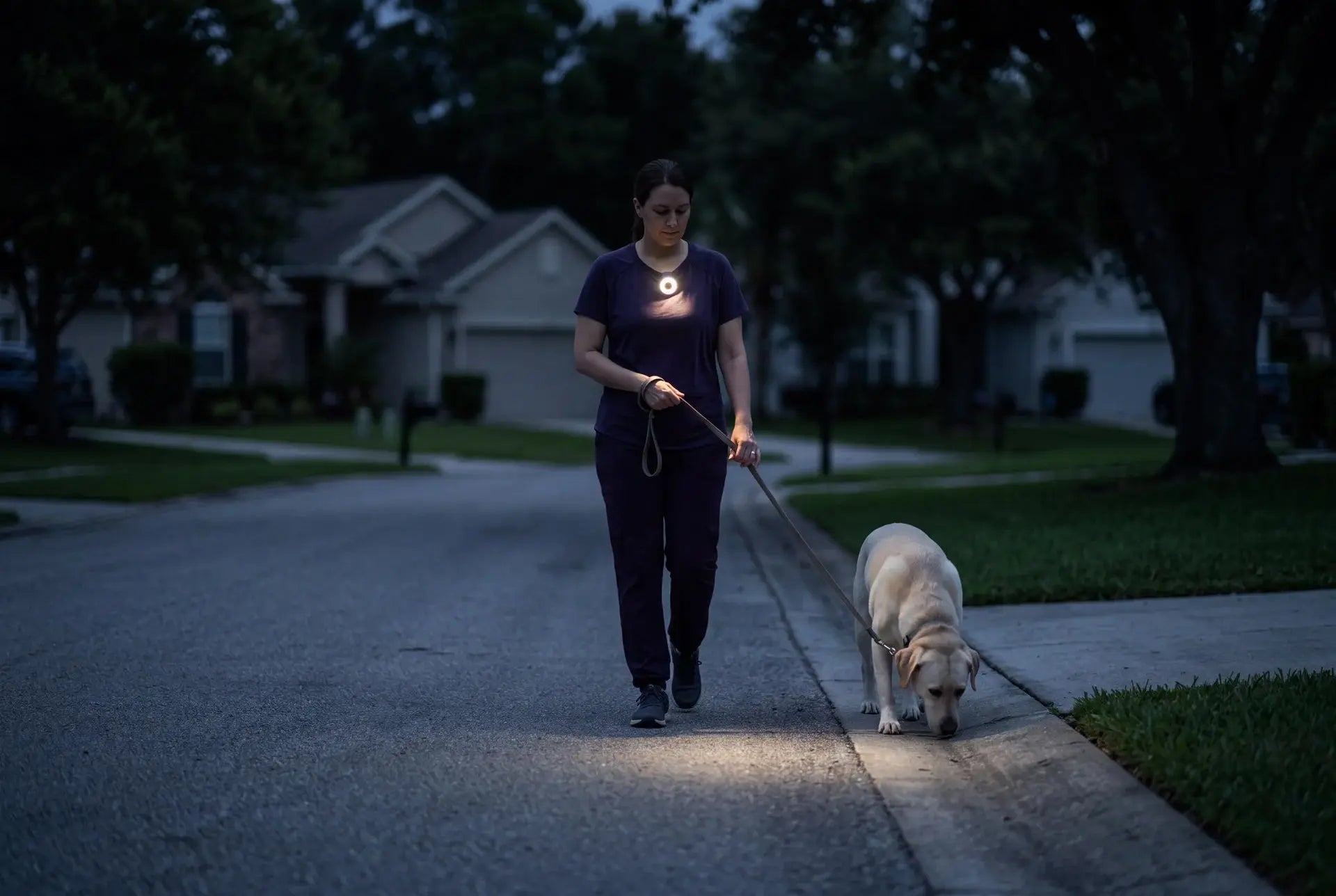
This is where specialized designs shine. The Scoutlite SparkO, for instance, is built around a high-CRI (CRI95) LED engine paired with four selectable color temperatures. Weighing just 40 grams, it is not designed to win a long-distance throw contest across a football field. Instead, it serves as a wearable, hands-free inspection light for people whose daily work demands accurate color rendering and comfortable close-range light.
Wearable lights fill a different role from conventional pocket torches, especially when you need close-range illumination without occupying either hand. Our complete guide to wearable lights explains the category in more detail.
Rechargeable vs. Regular Batteries for EDC
Your power source determines how often you need to maintain your light and how easy it is to keep running away from home.

Built-in Rechargeable Batteries
- Advantages: Extremely compact body designs, sealed weather resistance, convenient USB-C charging, no need to buy separate cells.
- Trade-offs: Once the battery dies, the entire light must be plugged in; you cannot swap in a fresh cell to keep working immediately.
18650 and 18350 Lithium-Ion Batteries
- Advantages: Both offer replaceable lithium-ion power and support strong output. The larger 18650 usually provides more capacity and runtime, while the shorter 18350 helps create a more compact flashlight.
- Trade-offs: An 18650 body takes up more pocket space. An 18350 saves length but normally gives up some battery capacity and runtime.
14500 and AA Dual-Fuel Systems
- Advantages: Dual-fuel lights accept both a rechargeable 14500 lithium-ion cell (for maximum output) and standard AA batteries (for emergency availability anywhere in the world).
- Trade-offs: AA output is significantly lower than 14500 output, and runtime under heavy use is modest.
AAA Batteries and Keychain Lights
- Advantages: Ultra-slim profiles, minimal weight, cheap replacement cells available at any gas station or corner shop.
- Trade-offs: Low energy density means shorter runtime and limited output.
CR123A Primary Batteries
- Advantages: Long shelf life, reliable cold-weather performance, and easy replacement during emergencies.
- Trade-offs: Standard CR123A cells are not rechargeable and can be relatively expensive, making them better suited for backup kits than heavy daily use.
USB-C vs. Magnetic Charging
USB-C has become the most convenient charging option for many EDC users. It allows you to charge your flashlight with the same cable you use for your phone, laptop, or wireless earbuds. On trips, you carry one cable for everything.
Magnetic charging systems, popularized by brands like Olight on models like the Baton 3 Pro Max, offer great convenience at home or on a desk. You simply snap the tailcap to the cable without worrying about wear on a rubber port cover. However, magnetic systems rely on a proprietary cable. If you forget that specific cable on a weekend trip, you cannot charge your light.
User Interface: The Feature You Only Notice When It Is Bad
A flashlight interface should be simple enough that you can operate it instinctively in an emergency or in total darkness.
Side Switch vs. Tail Switch
- Tail switches: Positioned at the back of the flashlight body. They are easy to find by feel in a pocket, work exceptionally well with gloves, and allow for momentary activation (holding the button for a quick burst of light without fully clicking it on).
- Side switches: Positioned near the head of the light. They are often more comfortable for casual, underhand holding and make cycling through brightness levels intuitive.
Shortcuts and Mode Memory
A good interface provides direct shortcuts so you do not have to cycle through blinding modes just to find a low beam:
- Direct access to low/moonlight: Holding the switch from off turns the light on in its lowest setting.
- Direct access to turbo: Double-clicking from any mode instantly engages maximum power.
- Mode memory: The light turns back on at the last brightness level you used.
Avoiding Accidental Activation
There are few things more frustrating than reaching into your pocket to find your flashlight turned on, running hot, and drained of battery because the button pressed against your keys.
Look for lights with recessed switches, physical lockout features (like rotating the clip over the button or loosening the tailcap a quarter-turn), or electronic lockouts (holding the button for three seconds to lock the interface).
Information vs. simplicity
Some compact EDC lights feature advanced displays. The Nitecore T4K, for instance, includes an OLED screen showing exact battery voltage, current mode, and remaining runtime. While this gives tech-focused users detailed information, a simpler single-button interface may better suit someone who wants bulletproof reliability without a learning curve.
Build Quality and Water Resistance
What Good Construction Feels Like
Many quality EDC lights use aluminum bodies with hard-anodized finishes (often rated Type III). This coating resists scratches from keys, pocketknives, and coins. Look for crisp machining, cleanly machined threads that do not grind when replacing batteries, and a sturdy lens made of toughened glass with anti-reflective coating.
IP Ratings Explained
- IPX4: Protected against splashing water from any direction (fine for rain, but not submersion).
- IPX6: Protected against powerful water jets from any direction.
- IPX7: Protected against temporary immersion in water up to 1 meter for 30 minutes.
- IPX8: Tested for continuous immersion under conditions specified by the manufacturer. It does not state a dust-resistance level.
- IP68: Dust-tight and tested for immersion under conditions specified by the manufacturer.
Beyond formal ratings, check physical durability details like drop resistance (usually rated at 1 to 1.5 meters) and whether the brand offers replacement O-rings or solid warranty coverage.
The Best EDC Flashlights for Different Carry Styles
No single flashlight is the absolute best choice for every person. A minimalist who attaches a light to their car keys has completely different needs than an electrician who needs high CRI for inspecting wiring harnesses. Here is how top options compare across distinct categories.

Fenix PD26R ACE
A classic tubular design built with high-end materials. Reaches an official maximum of 1,300 lumens with a 354-meter beam distance, driven by an 18350 battery in an IP68-rated aluminum body with USB-C charging.
Main compromise: Its round 4.17-inch body takes up more pocket space than a flat or keychain design.
View on Amazon
Nitecore T4K
Delivers an astonishing 4,000-lumen turbo burst from a 77-gram keychain-friendly package featuring an OLED status screen and USB-C charging.
Main compromise: Turbo mode is a brief burst meant for short orientation, not sustained use, and the dual-button interface has a small learning curve.
View on Amazon
Scoutlite SparkO
Weighing just 40 grams, it features a CRI95 emitter engine with four selectable color temperatures, red light mode, a magnetic back, and a two-way sandwich clip for hands-free collar, pocket, or magnetic surface mounting.
Main compromise: Designed specifically for close-range quality illumination; it is not built for long-distance beam distance.
Shop SparkO
Scoutlite VARIO 700
Replaces thick round tubes with an ultra-slim 21mm flat body that slides flush into a pocket. Packs a 700-lumen white light, UV inspection emitter, RGB signaling LEDs, a removable pocket clip, and a magnetic back powered by a 1,000mAh USB-C battery.
Main compromise: The flat ergonomics feel different in hand compared to a traditional round torch, and users who only want a simple white beam may not need the UV and RGB functions.
Shop VARIO 700
Olight Baton 3 Pro Max
Exceptionally polished fit and finish, a high-capacity 21700 battery delivering up to 2,500 lumens peak output, smooth optics, a two-way pocket clip, and effortless magnetic desk charging.
Main compromise: Relies on a proprietary magnetic charging cable rather than universal USB-C, and the wider 21700 body is chunkier in a pocket than smaller EDC options.
View on Amazon
Sofirn SC21 Pro
Exceptional value for a high-CRI (90 CRI Samsung LH351D) 16340 battery light. Delivers up to 1,100 peak lumens, direct USB-C charging, a magnetic tailcap, and an IPX8 rating in a tiny 73mm body.
Main compromise: The feature-dense interface (Anduril UI) can feel overly complex for casual users, and clip retention is average.
View on AmazonEDC Flashlight Comparison Matrix
| Product | Carry Style | Max Output | Battery / Charging | Key Strength | Best For | Main Compromise |
|---|---|---|---|---|---|---|
| Fenix PD26R ACE | Tubular pocket | 1,300 lm | 18350 / USB-C | High throw distance and IP68 build | Outdoor checks and classic grip | Takes up more pocket space than flat or keychain lights |
| Nitecore T4K | Keychain | 4,000 lm | Built-in / USB-C | Extreme turbo burst and OLED display | Minimalist keychain power | Turbo mode is a brief burst |
| Scoutlite SparkO | Wearable / clip | 300 lm | Built-in / USB-C | 40g weight, CRI95 and hands-free clip | Close-range work and inspection | Not built for long-distance throw |
| Scoutlite VARIO 700 | Flat multifunction | 700 lm | Built-in / USB-C | 21mm ultra-slim flat profile, UV and RGB | Flush pocket carry and multi-tool use | Flat grip differs from round tubes |
| Olight Baton 3 Pro Max | Premium tubular | 2,500 lm | 21700 / magnetic | Polished build, high output and magnetic dock | Heavy-duty EDC and smooth optics | Proprietary charging cable; wider body |
| Sofirn SC21 Pro | Budget tube | 1,100 lm | 16340 / USB-C | 90 CRI LH351D LED and excellent value | Budget-conscious high-CRI carry | Anduril UI has a learning curve |
Flat Flashlights vs. Traditional Tubular Flashlights
The rise of flat flashlights is one of the most practical recent developments in everyday carry.
Flat Flashlights
- Pros: Can offer an advantage for pocket carry because they sit closer to the pocket wall beside your phone or wallet, will not roll off a hood or workbench, and often integrate side emitters or magnets seamlessly.
- Cons: Unique grip mechanics take getting used to, and batteries are typically built-in rather than swappable.
Traditional Tubular Flashlights
- Pros: Familiar full-hand grip, mature optic reflectors for long throw distance, wide availability of swappable 18650, 18350, or AA battery options.
- Cons: Create a noticeable round bulge in tighter pants and roll easily when set down on flat surfaces.
Do You Need Extra Features in an EDC Light?

- Magnetic tailcap: Useful for working under a steel car hood, placing a light inside a breaker box, or mounting to metal shelving for hands-free work.
- UV light: Useful for spotting pet stains, inspecting HVAC leaks, checking currency, or verifying security markings.
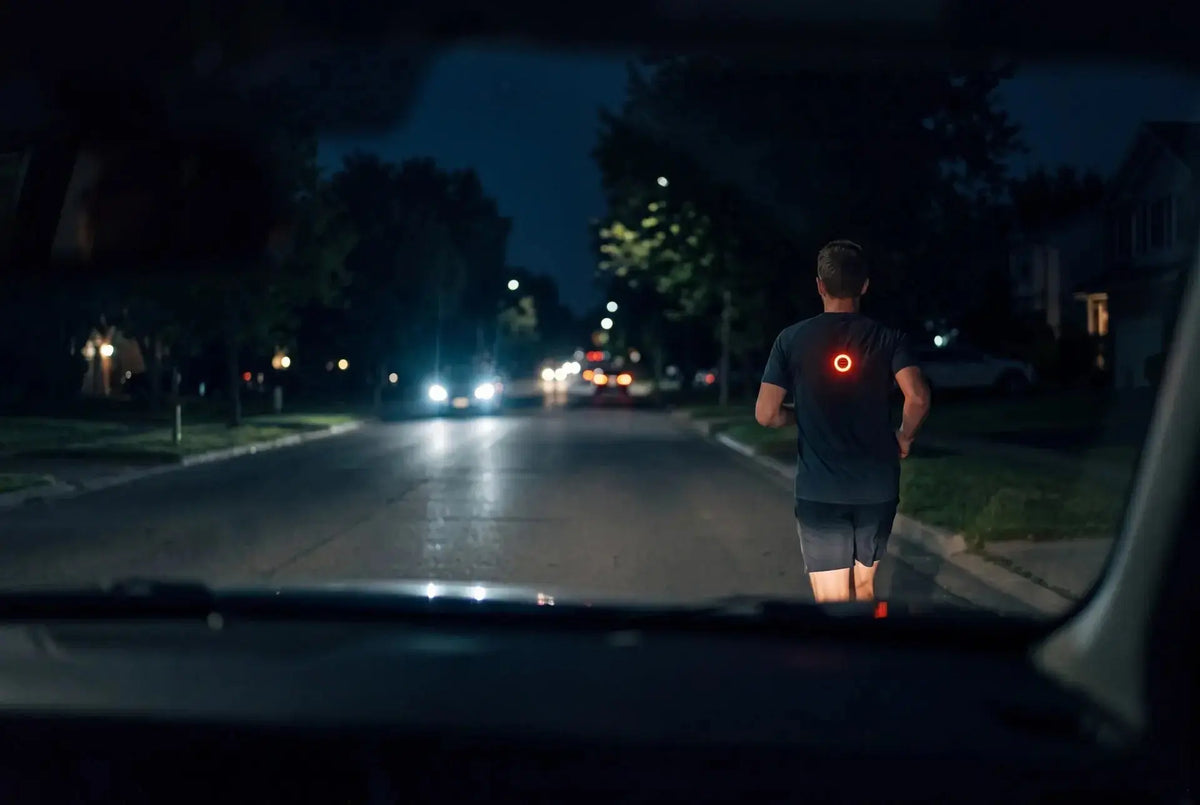
- Red / RGB modes: Dim red light can reduce disruption to dark-adapted vision during night navigation and serves as a low-profile signal marker for walking along unlit roads.
- Right-angle design: Converts a handheld torch into an instant chest- or strap-mounted work light.
Extra features only add value if you actually use them. Otherwise, they add unnecessary button presses and weight to your daily carry.
How to Choose the Best EDC Flashlight for You
Use these simple questions to narrow down your choice:
- Where will you carry it? If it lives on a keyring, choose a keychain light. If it goes in a front jeans pocket beside a phone, consider a flat light or a deep-clip tube light.
- What tasks do you face daily? Close-up repairs, writing, and inspection demand high CRI and a flood beam. Outdoor walking or property checks benefit from extra throw distance.
- How do you want to charge it? If you travel often, stick with universal USB-C. If you keep the light on a nightstand or desk, magnetic charging is convenient.
- Do you prefer swappable or built-in batteries? Frequent heavy users should look at 18650, 18350, or 14500 dual-fuel systems. Casual users will appreciate compact built-in lithium-polymer designs.
Quick EDC Flashlight Buying Checklist
- Pocket-friendly: Does the shape and weight fit comfortably alongside your daily gear?
- Secure clip: Does the clip slide smoothly over pocket seams and hold with solid tension?
- Intuitive interface: Can you access moonlight mode or turn the light on without a complex button sequence?
- Useful beam: Does the optical profile suit close-up work or long-range throw?
- High CRI (if needed): Is the color accuracy rated 90+ for inspection tasks?
- Practical charging: Does it use universal USB-C or a charging method you trust?
- Accidental lockout: Can you lock the switch so it does not turn on in your pocket?
- Durable build: Does the construction, clip strength and water resistance suit the conditions in which you will carry it?
How to Maintain an EDC Flashlight
A little occasional maintenance helps an EDC light stay reliable:
- Wipe the glass lens with a clean microfiber cloth to remove pocket lint and oil.
- Inspect rubber O-rings for cracking or dirt, and apply a tiny dab of silicone grease to the threads if tailcaps feel scratchy.
- Clean metal battery contacts with a dry cotton swab.
- Clear lint carefully from the USB-C charging port with a non-metallic tool, taking care not to damage the port.
- Engage the electronic or physical lockout whenever carrying the light in a bag or pocket.
Final Verdict: Which EDC Flashlight Deserves Your Pocket Space?
There is no single best EDC flashlight for every pocket because everyone carries a different set of tools to solve different daily problems.
If you want a classic, high-performance tubular torch for long outdoor reach, traditional models from brands like Fenix or Olight remain excellent choices. If you want ultra-compact burst power on a keyring, lights like the Nitecore T4K push the boundaries of output. If you want high-CRI performance on a budget, options like the Sofirn SC21 Pro deliver great value in a compact package.
If your daily routine favors wearability and color accuracy for close-up tasks, a lightweight wearable like the Scoutlite SparkO earns its spot by clipping to your collar and keeping your hands free. And if you hate round pocket bulge and want a multi-tool lighting approach, a flat design like the Scoutlite VARIO 700 provides a slim, flush profile with white, UV, and RGB versatility.
The best EDC light is not the one with the longest specification sheet. It is the one that stays in your pocket, stays out of your way, and delivers the exact light you need the moment you reach for it.
Frequently Asked Questions
What is the best EDC flashlight?
The best EDC flashlight depends on your carry style. For traditional beam reach, compact tubular lights are great. For hands-free inspection, a high-CRI wearable light like the SparkO is ideal. For a slim, bulge-free pocket footprint with extra functions, a flat light like the VARIO 700 is a top choice.
How many lumens should an EDC flashlight have?
For most daily tasks (reading labels, looking under furniture, walking a path), 100 to 300 lumens is plenty. Higher outputs above 1,000 lumens are helpful for short outdoor bursts, but sustained medium output matters far more than peak turbo numbers.
Are flat flashlights better for everyday carry?
Flat flashlights can offer an advantage for pocket carry because they sit flush against the body alongside a phone or wallet, rather than creating a thick round bulge. They also do not roll away when placed on flat work surfaces.
What is high CRI, and why does it matter in an EDC light?
High CRI (Color Rendering Index) measures how accurately a light reveals true colors compared to sunlight. An EDC light with a high CRI rating (90+) makes it easy to distinguish wire colors, spot fluid leaks, and inspect details that low-CRI lights wash out.
Is USB-C better than magnetic charging for an EDC light?
USB-C is generally better for travel and daily convenience because it uses the same cable as your phone and other devices. Magnetic charging is convenient for desk setups, but relies on a custom cable you must carry with you.
What battery type is best for an EDC light?
For maximum power and swappable runtime, 18650 cells are excellent. For battery availability and flexibility, a compatible 14500/AA dual-fuel light is a strong option. For ultra-thin, low-profile carry, integrated lithium-polymer batteries allow for the slimmest body designs.